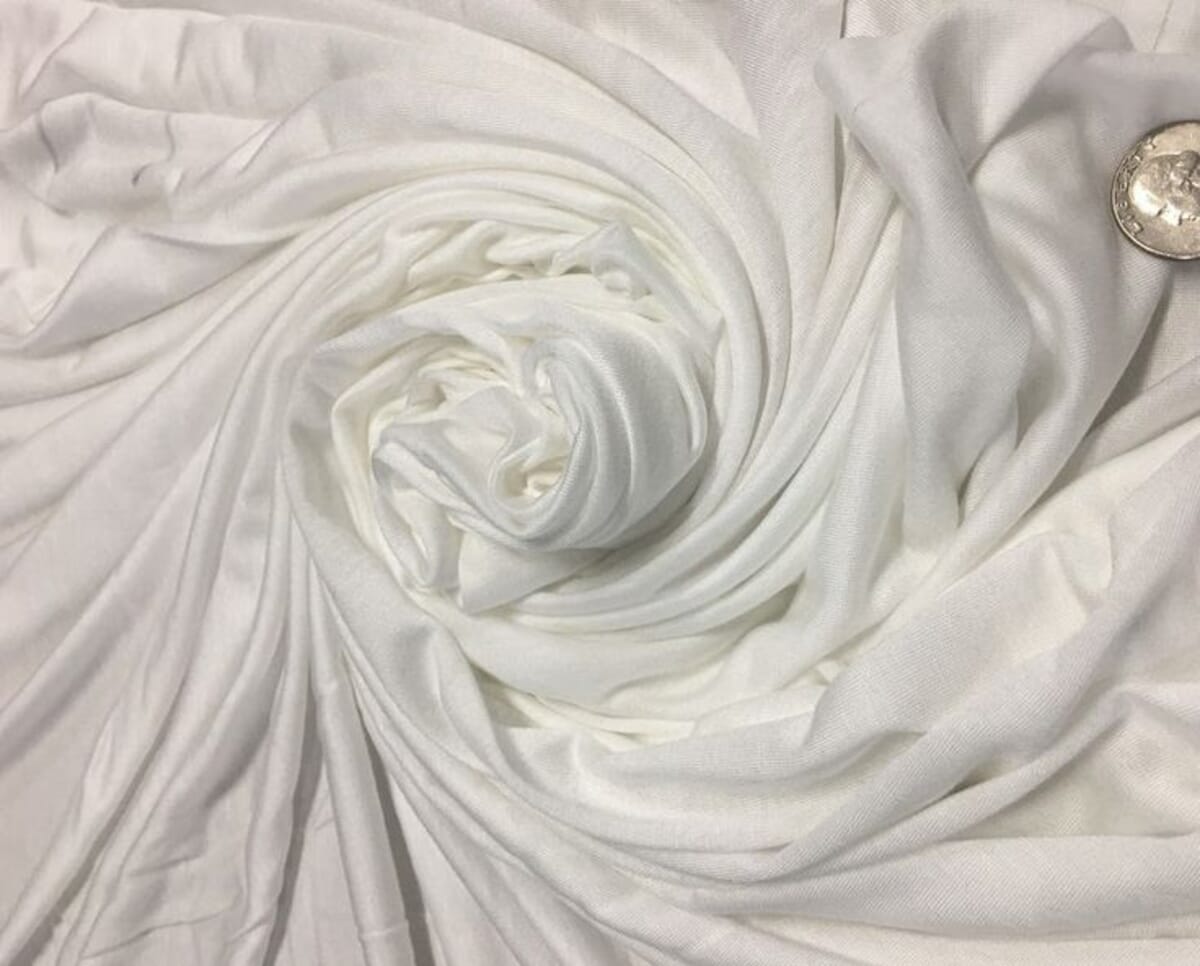
Tencel is the brand name for a family of lyocell fibres made from FSC-certified wood pulp, produced through a closed-loop solvent process that recovers more than 99.8% of the chemistry used (Lenzing AG, 2024). It is the fastest-growing of the man-made cellulosics, though it remains a small category: world lyocell output was about 0.4 million tonnes in 2024, roughly 5% of the 8.4 million tonnes of man-made cellulosic fibre produced that year, with the MMCF total up 8% (Textile Exchange, 2025). A claim that lyocell demand grew 22% year-over-year has been withdrawn; that figure is not Textile Exchange's. For fashion brands sourcing production in Portugal, understanding Tencel is the difference between a dress that flows and photographs beautifully, and one that feels stiff on-body.
What this guide covers
This guide covers what Tencel actually is, how it's made, the difference between Tencel and generic lyocell, the GSM tiers available for tencel wear in 2026, real EUR pricing per meter across the northern Portuguese textile cluster, MOQ patterns for tencel garments, and how it compares to cotton and modal. Everything below reflects the manufacturer-side view, based on production runs coordinated across our factory group in the Porto, Guimarães, Braga, Barcelos, and Famalicão regions.
Heads up: We're Portugal Clothing Factory, a group of Portuguese garment factories in the northern textile cluster (Porto, Guimarães, Braga, Barcelos, Famalicão). We've documented 80 factories across the region and verified 25 active producers, so the observations in this article come from that research and from lyocell clothing production runs placed across the group between 2024 and 2026.
Key takeaways
Key Takeaways
- Tencel is Lenzing's branded lyocell fibre, spun from FSC-certified eucalyptus, beech, and spruce pulp in a closed-loop process that recovers more than 99.8% of solvent (Lenzing AG, 2024)
- Lyocell is the fastest-growing man-made cellulosic but still a small one: about 0.4 million tonnes in 2024, roughly 5% of all MMCF (Textile Exchange, 2025)
- Portuguese Tencel fabric prices in 2026 range from €7 to €17 per meter, depending on blend and GSM
- Tencel is best for dresses, blouses, athleisure, and drapey knitwear; it isn't the right pick for structured tailoring
- Roughly 15% of the 80 documented factories in our group stock Tencel yarn as a standard offering
Try it free: Pressure-test your Tencel garment production cost with our calculator. 60 seconds, no email required.
What Is Tencel Fabric?
Tencel is the registered brand name Lenzing AG uses for its lyocell and modal fibres, both regenerated cellulosic yarns spun from sustainably harvested wood pulp. Roughly 100% of Lenzing's wood inputs came from FSC or PEFC-certified forests in 2024, and the process holds EU Ecolabel certification (Lenzing AG, 2024). In fabric form, Tencel is soft, drapey, moisture-wicking, and biodegradable.
The name "Tencel" specifically covers three fibre types: Tencel Lyocell (the flagship), Tencel Modal, and Tencel Luxe (a filament yarn). Most tencel fabric you'll see on the market is Tencel Lyocell, either in 100% form or blended with cotton, wool, or elastane. The fibre feels closer to silk than cotton, with a fluid drape and a slight sheen that photographs well.
Where it sits among the cellulosics
Within the cellulosic family, Tencel sits above generic viscose (rayon) in both performance and environmental profile. Viscose uses an open chemical process; Tencel uses a closed-loop system. Viscose weakens sharply when wet; Tencel keeps roughly 85% of its dry strength when wet. That single property is why Tencel wear survives washing better than most other regenerated fibres.
Citation Capsule: Tencel is Lenzing AG's branded family of lyocell and modal fibres, spun from FSC and PEFC-certified wood pulp using a closed-loop solvent process. In 2024, Lenzing sourced roughly 100% of its wood from certified forests, and the fibre carries EU Ecolabel certification for reduced environmental impact (Lenzing AG, 2024).
Other names you'll see
Tencel is often referred to as "lyocell", though the two are not fully interchangeable. All Tencel is lyocell; not all lyocell is Tencel. Generic lyocell can be produced by any mill under the ISO name "lyocell fibre". Tencel requires a Lenzing supply agreement and comes with brand traceability. In Portuguese factory documentation, you'll see "lyocell", "Tencel", or "malha lyocell" for knit versions.
How Is Tencel Made?
Tencel is made through a closed-loop lyocell process that dissolves wood pulp in N-methylmorpholine N-oxide (NMMO), a non-toxic organic solvent. According to Lenzing's own operations data, more than 99.8% of the solvent is recovered and reused across production cycles, a level of chemistry recovery unmatched by conventional viscose (Lenzing AG, 2024). The process was not Lenzing's invention. Courtaulds developed it in Britain, running a pilot plant at Coventry in 1982 and a semi-commercial line at Grimsby in 1988, then reaching full commercial production at Mobile, Alabama in 1992 under the trade name TENCEL. Lenzing acquired the Tencel business in 2004, which tripled its lyocell capacity and gave it the brand it runs today. Earlier versions of this article credited Lenzing with patenting the process in the 1990s.
The process, step by step
The steps are straightforward, at least in principle. Certified wood chips (mostly eucalyptus, beech, and spruce) are pulped into cellulose sheets. The sheets are dissolved in warm NMMO to form a clear, viscous solution. That solution is extruded through spinnerets into a water bath, where the fibre precipitates and hardens. The used solvent is then filtered, purified, and cycled back into the process. Almost nothing goes to waste.
After spinning, the raw fibre is cut, baled, and shipped to spinners who turn it into yarn. Portuguese mills then knit or weave the yarn into fabric, dye and finish it, and ship it to garment factories. The finishing stage matters as much for Tencel as it does for cotton. Weak scouring or aggressive dyeing can dull the natural sheen and reduce drape. We've observed that mills who dye at yarn stage rather than piece stage tend to preserve the visual quality of Tencel more consistently.
Why the solvent loop matters
Why the solvent loop matters: conventional viscose production releases carbon disulfide and other chemistry into wastewater at meaningful levels. Tencel's closed loop keeps solvent inside the system. For brands making sustainability claims, that difference is legally material. It's also the reason Tencel qualifies as a "preferred fibre" under Textile Exchange criteria, while generic viscose usually does not.
Citation Capsule: Tencel is produced through a closed-loop lyocell process that dissolves FSC or PEFC-certified wood pulp in NMMO solvent, then recovers more than 99.8% of that solvent for reuse. The process was developed by Courtaulds, reaching full commercial production at Mobile, Alabama in 1992; Lenzing acquired the Tencel business in 2004. It avoids the carbon disulfide emissions typical of conventional viscose manufacturing (Lenzing AG, 2024).
The role of FSC and PEFC certification
Every Tencel fibre carries chain-of-custody documentation from the forest to the mill. FSC and PEFC certifications verify that the trees were harvested from responsibly managed forests, with no clear-cutting of primary forest and controlled replanting cycles. This traceability is what allows Tencel garments to make credible sustainability claims under Directive (EU) 2024/825, the Empowering Consumers Directive, which has applied since 27 September 2026 and bans generic environmental claims that cannot be substantiated. The separate Green Claims Directive, named in earlier versions of this article, is not law: the Commission moved to withdraw it in June 2025 and it remains stalled.
Is Tencel the Same as Lyocell?
Tencel and lyocell are related but not identical. Lyocell is the generic fibre category defined under ISO 2076; Tencel is Lenzing AG's registered trademark for its specific lyocell product line. Lenzing is the largest single lyocell producer, at roughly 18 to 22% of the lyocell fibre market, and was moving past 100,000 tonnes of annual lyocell capacity in 2025. Because TENCEL is effectively the only consumer-facing brand in the category, the name gets used as shorthand for all lyocell. We have withdrawn a claim that Lenzing controlled roughly 80% of global branded lyocell capacity, credited to Textile Exchange: Textile Exchange reports fibre volumes, not branded-capacity shares, and the overall market is far less concentrated than 80% implies.
What the Tencel brand actually buys you
The practical differences matter for sourcing. Generic lyocell can be produced by any mill using the closed-loop process, but the level of solvent recovery, wood certification, and quality control varies. Tencel-branded fibre carries a guarantee: Lenzing's process, Lenzing's chain of custody, Lenzing's audit trail. That guarantee has a cost, typically 10 to 20% above generic lyocell at the yarn level.
For most Portuguese factories, that premium is worth paying when a brand wants to make explicit sustainability claims on hangtags or product pages. Regulators in the EU are increasingly strict about unverified environmental claims, and Tencel's branded documentation reduces legal risk. For brands that want the fibre performance without the marketing angle, generic lyocell is a valid choice.
When to specify "Tencel" vs "lyocell" on a tech pack
We've found that founders who specify "Tencel Lyocell" on their tech pack, rather than "lyocell", get more consistent yarn sourcing and fewer questions from the factory. Portuguese mills either stock Tencel branded yarn or don't; specifying it forces a clear yes/no. A vague "lyocell" spec leads to substitution with cheaper alternatives that may or may not deliver the same drape and colour. Small detail, real impact.
Is Tencel Cotton?
No. Tencel contains no cotton. It is a regenerated cellulose fibre made from wood pulp, usually eucalyptus, beech or spruce, while cotton is a natural seed fibre picked from the cotton plant. Both are cellulose, which is why they feel related and blend well, but they are different fibres with different labels.
Where the confusion comes from
Most Tencel you meet in a shop is a Tencel-cotton blend, commonly 60/40 or 50/50, so the hangtag genuinely does say both. That blend is the single most-requested "sustainable upgrade" at Portuguese mills: it keeps most of the drape and moisture behaviour while cutting fabric cost by 20 to 30% against 100% Tencel.
How they differ on the body
- Drape. Tencel falls and flows; cotton holds a shape. Swap one for the other without re-cutting the pattern and the garment will hang differently.
- Moisture. Tencel absorbs 12 to 13% of its weight against cotton's 7 to 8%, and releases it faster.
- Wet strength. Tencel keeps about 85% of its dry tenacity wet. Cotton actually gains strength wet; viscose loses up to half.
- Cost. At 180 to 200 GSM in Portugal, Tencel runs €9 to €14 per metre against cotton's €4 to €9.
Citation Capsule: Tencel is not cotton. Tencel is Lenzing's branded lyocell, regenerated from wood pulp, while cotton is a natural seed fibre; the two are both cellulose but are separate fibres under labelling law. The confusion comes from Tencel-cotton blends, commonly 60/40 or 50/50, which are the most frequently ordered Tencel construction at Portuguese mills because they cut fabric cost 20 to 30% against 100% Tencel while keeping most of the drape.
What Are the Properties of Tencel Fabric?
Tencel's core properties come from the way its fibre cross-section holds and releases moisture. The fibre absorbs about 50% more moisture than cotton: roughly 12 to 13% of its own weight at standard conditions against cotton's 7 to 8%, which is why athleisure and performance brands specify it (Lenzing AG, 2024). Note the distinction an earlier version of this article blurred: that 50% describes absorbency, not wicking speed. Beyond moisture management, the fibre is soft, biodegradable in soil and marine conditions, and colour-holds well through repeated washes.
The properties that matter on a tech pack
The key physical properties fashion founders care about:
- Softness: natural silk-like hand, no chemical softeners needed
- Drape: fluid, almost liquid on-body, ideal for dresses and blouses
- Moisture absorbency: 12 to 13% of its weight, about 50% more than cotton at 7 to 8%
- Wet strength: retains around 85% of dry strength when wet
- Breathability: highly breathable, temperature-regulating
- Biodegradability: decomposes within months in soil and marine conditions
- Wrinkle resistance: moderate, better than pure linen, weaker than polyester blends
- Colour depth: dyes deeply and evenly, with strong colour retention
The property founders underestimate
The property most founders underestimate is drape. Tencel has a hand and flow closer to silk than to cotton. That means garments cut for cotton will not sit the same way when the fabric is switched to Tencel. Patterns often need adjustment. Structured tailoring rarely works with 100% Tencel because the fabric wants to move.
Isn't more softness always better? Not for every silhouette. A boxy oversized hoodie in 100% Tencel french terry loses the structure that makes the silhouette work. In our experience, Tencel shines in womenswear dresses, drapey blouses, wide-leg trousers, and athleisure that benefits from moisture management. It's a poor fit for tailored jackets and structured menswear.
Citation Capsule: Tencel fibres absorb roughly 50% more moisture than cotton, 12 to 13% of their weight against cotton's 7 to 8%, and retain around 85% of their dry tenacity when wet. This wet-strength property is why lyocell clothing survives repeated washing better than viscose, and why Tencel dominates in dresses, blouses, and performance layers where cotton would sag (Lenzing AG, 2024).
What Garments Are Made with Tencel?
Tencel garments cluster in three main categories: womenswear (dresses, blouses, skirts), athleisure (tees, joggers, sports bras with moisture management), and premium loungewear (drapey knits, robes, pyjamas). Womenswear takes the largest share, with athleisure the fastest-growing use. A figure putting European womenswear at roughly 65% of Tencel fibre has been withdrawn: Textile Exchange reports fibre production volumes, not end-use splits by region or garment category.
Garment applications by construction
Specific garment applications by fabric type:
- Tencel woven (150-200 GSM): dresses, blouses, shirts, wide-leg trousers, midi skirts
- Tencel jersey knit (140-200 GSM): drapey tees, dresses, athleisure tops, lightweight loungewear
- Tencel french terry blend (240-320 GSM): premium hoodies with silky hand, athleisure sets, robes
- Tencel-cotton blend (180-260 GSM): everyday tees, elevated basics, sustainable capsules
- Tencel-elastane blend (180-220 GSM): activewear leggings, sports bras, moisture-wicking layers

Emerging brand founders often overlook Tencel's role in athleisure. The fibre wicks moisture better than cotton, dries faster, and doesn't hold body odour the way polyester does. That combination is why sustainable performance brands increasingly specify Tencel-elastane blends in leggings and layering pieces. It's a category with real growth in Portuguese production over the last two years.
Womenswear remains the core
Womenswear remains the biggest application, though. A 160 GSM Tencel woven dress drapes better than any comparable cotton fabric, holds colour depth beautifully, and photographs well in both natural and studio light. For brands building a womenswear line in Portugal, Tencel is often the fabric that unlocks the on-body look their design team wants.
Find your factory: Browse the free factory directory preview, or unlock the premium directory for €39 to see 80 documented Portuguese factories with tencel capability flagged.
What GSM Ranges Are Tencel Fabrics Available In?
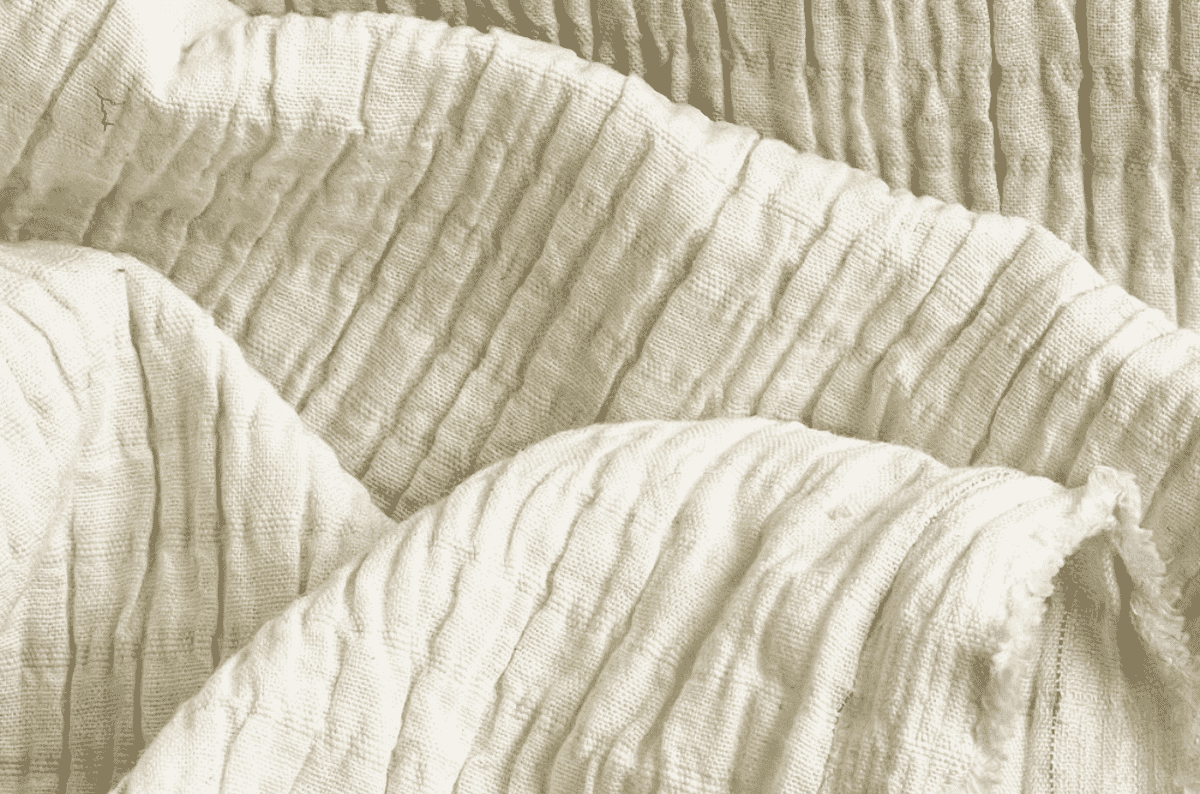
Tencel fabrics span a wide GSM range, from around 100 GSM for lightweight blouses and shirting up to roughly 320 GSM for Tencel-blended french terry. The 140 to 200 GSM band covers most of what we book, particularly the dress and blouse categories. A claim that it represents the majority of European production, credited to EURATEX, has been withdrawn: EURATEX publishes trade, employment and output data for the European industry, not GSM breakdowns.
Different weight tiers serve different silhouettes. Choosing the wrong tier is a common first-collection mistake. A 130 GSM Tencel dress feels close to sheer in flat lighting. A 280 GSM Tencel french terry hoodie is heavier than most founders expect. Getting the weight right is a first-order decision, same as with cotton.
Light Tencel (100-140 GSM)
Light Tencel is used for summer blouses, camisoles, sheer shirting, layering pieces, and lightweight kimonos. It feels almost slippery on-body and drapes like silk. This tier is not typically used for structured pieces because it lacks the body to hold a shape.
Standard Tencel (150-200 GSM)
This is the default womenswear weight and the most commonly ordered tier at Portuguese factories carrying lyocell. It works for dresses, midi skirts, structured blouses, wide-leg trousers, and lightweight jackets with unstructured shoulders. Most first-time Tencel collections launch here.
Mid-weight Tencel (200-260 GSM)
Mid-weight Tencel is used for elevated tees, jersey dresses, athleisure tops, and light loungewear pieces. It has more body than the standard tier, holds shape better through washing, and works well in Tencel-cotton blends. Sustainable performance brands often land in this range for their day-to-day pieces.
Heavier Tencel blends (260-320 GSM)
This tier is where Tencel-french terry blends live. The fabric is soft, has a distinctive silky hand, and holds shape well after multiple washes. It's used for premium hoodies, structured joggers with drape, and robes. This range requires blends: pure Tencel above 260 GSM is uncommon because the fabric loses its characteristic drape.
Citation Capsule: Tencel fabric GSM ranges from 100 (sheer blouses) to 320 (Tencel-cotton french terry blends), with the 150 to 200 GSM standard tier accounting for most European womenswear production. Above 260 GSM, Tencel is almost always blended with cotton or modal because pure Tencel at heavier weights loses its characteristic drape. Tiers reflect what Portuguese mills actually stock and quote, not a published standard.
Is Tencel a Summer or a Winter Fabric?
Both, and the weight decides which. Tencel is thermoregulating rather than warm or cool by nature: it moves moisture away from the skin quickly, which reads as cooling in heat and as dry comfort in cold. What makes a Tencel garment summer or winter is its GSM and whether it is blended.
In summer
Light Tencel at 100 to 160 GSM in woven or jersey is a strong warm-weather fabric. It absorbs more sweat than cotton, dries faster, and does not cling once damp. Summer blouses, slip dresses, camisoles and wide-leg trousers sit here.
In winter
Tencel is not insulating on its own, so for cold weather it is blended. Tencel-wool gives warmth with a softer hand than wool alone, and Tencel-cotton french terry at 260 to 320 GSM makes a premium hoodie with a silky face. Pure Tencel at heavy weights loses the drape that makes it worth buying.
Citation Capsule: Tencel works in both seasons because it is thermoregulating rather than inherently warm or cool: it absorbs 12 to 13% of its weight in moisture against cotton's 7 to 8% and releases it quickly. GSM decides the season. Light Tencel at 100 to 160 GSM suits summer wovens and jerseys, while winter use calls for a blend, typically Tencel-wool or a Tencel-cotton french terry at 260 to 320 GSM.
What Does Tencel Cost per Meter in Portugal?
Tencel fabric prices in Portugal in 2026 range from €7 per meter for standard cotton-Tencel blends at moderate GSM, up to €17 per meter for heavier Tencel french terry blends with certification. Composition, GSM and Lenzing licensing are the three largest cost drivers. We have withdrawn a figure putting them at roughly 80% of price variance, which implied a regression nobody has run, along with the ATP citation attached to it: ATP is the sector association and publishes no fabric price survey. Every euro figure on this page is a quote from a Portuguese mill.
Understanding these tiers helps founders budget realistically during tech pack preparation, and avoid the "why is this so much more than cotton?" moment during first quotes. Tencel is a premium cellulosic, and pricing reflects both the licensed yarn cost and the lower production volumes at Portuguese mills.
Composition drives base cost
100% Tencel is the most expensive standard option because the yarn commands a licensing premium and comes exclusively from Lenzing. Tencel-cotton blends (60/40 or 50/50) reduce the price by 20 to 30% while keeping most of the drape and moisture properties. Tencel-elastane blends add cost for the elastane content and precision knitting. Certified organic combinations (Tencel + GOTS cotton) sit at the top of the price range.
GSM adds cost proportionally
Doubling the GSM roughly doubles the yarn consumption. A 280 GSM Tencel french terry uses about 1.6 times the yarn of a 180 GSM Tencel jersey, which typically increases the fabric price by 40 to 60%. Yarn cost dominates the total for Tencel more than it does for cotton, because the base fibre is more expensive.
Certifications and traceability add measurable premium
Tencel already carries FSC/PEFC and EU Ecolabel by default, so those don't add extra. Combining Tencel with GOTS-certified cotton adds €1 to €3 per meter over conventional cotton blends. OEKO-TEX Standard 100 is standard at most Portuguese mills carrying Tencel. GRS certification (for any recycled content in the blend) adds €0.50 to €1.50 per meter.
Practical planning: for a Tencel dress using 1.8 meters of 160 GSM Tencel woven, fabric cost lands at €18 to €29 per garment. A Tencel-cotton blend hoodie using 1.7 meters of 280 GSM french terry blend costs €19 to €29 in fabric alone. That's roughly 40 to 60% more than the same garment in standard cotton, and this fabric-only difference is often what surprises first-time founders costing a sustainable capsule.
Need a tech pack? Get a factory-ready single-style tech pack for €79. See what's included.
How Does Tencel Compare to Cotton and Modal?
The most common founder question is whether to use Tencel, cotton, or modal for a specific silhouette. The short answer: cotton for structure and value, modal for softness and everyday knits, Tencel for drape, sustainability claims, and premium hand. A figure putting roughly 30% of European sustainable-positioning brands on Tencel or lyocell as their primary fibre has been withdrawn, along with the Textile Exchange citation attached to it: no such brand survey is published.
How the three differ
The three fibres differ in three important ways. Cotton is natural, familiar, and cheapest, but wrinkles easily and doesn't drape like the cellulosics. Modal (which Lenzing also produces under the Tencel brand) is softer than cotton and drapes better, but has lower wet strength than lyocell. Tencel Lyocell has the best drape and moisture management of the three, the highest wet strength among cellulosics, and the strongest environmental profile, at meaningfully higher cost.
| Attribute | Tencel Lyocell | Cotton | Modal |
|---|---|---|---|
| Fibre source | FSC eucalyptus, beech, spruce pulp | Cotton plant, natural | Beech tree pulp |
| Softness | High, silk-like | Moderate | Very high |
| Drape | Excellent, fluid | Moderate | Good |
| Moisture wicking | Absorbs ~50% more than cotton (12-13% vs 7-8%) | Absorbent, slow to dry | Good |
| Wet strength | High (~85% of dry) | Moderate | Lower than Tencel |
| Biodegradability | Full, marine and soil | Full | Full |
| Environmental profile | Closed-loop, over 99.8% solvent reuse | Water-intensive if conventional | Between viscose and Tencel |
| Cost per meter (Portuguese, 180-200 GSM) | €9 to €14 | €4 to €9 | €7 to €18 |
| Best for | Dresses, blouses, athleisure, drapey knits | Basics, hoodies, structured pieces | Everyday tees, soft loungewear |
Sources: OEKO-TEX Association, Textile Exchange, GOTS, Bluesign, PCF factory group data (2024-2026).
When to choose which: we consistently see three patterns across our factory group. Brands building a drapey womenswear line or sustainable premium capsule go with Tencel. Brands prioritising cost, structure, and familiarity (streetwear, basics, structured menswear) stay with cotton. Brands that want silky next-to-skin comfort in high-volume everyday tees split toward modal. Increasingly, we see brands blending: 60/40 cotton-Tencel is the single most-requested "sustainable upgrade" blend at Portuguese mills right now.
Citation Capsule: Tencel Lyocell outperforms cotton and modal on drape, moisture wicking, and wet strength, at roughly 60 to 90% higher fabric cost. Cotton-Tencel blends are the most commonly requested "sustainable upgrade" at Portuguese mills, from our own order book across 2024 to 2026.
How Do Portuguese Factories Work with Tencel?
Portuguese factories produce some of Europe's most respected lyocell clothing, though only a subset of the cluster carries Tencel yarn as a standard offering. Roughly 15% of the 80 documented factories in our group stock Tencel yarn regularly, with another 20% able to book it against confirmed orders (PCF factory documentation, 2026). Fabric mills in the Ave Valley and Vale do Cávado handle most Tencel knitting and weaving for the region.
The production sequence
Portuguese Tencel production follows a specific sequence. Yarn is booked from Lenzing-authorised spinners (typically 3 to 5 weeks lead time). The mill knits or weaves the fabric, dyes and finishes it (7 to 12 days). The fabric ships to a CMT factory for garment assembly. Total lead time from order to shipped tencel garments typically runs 8 to 11 weeks for standard blends, and 10 to 13 weeks for 100% Tencel with certified organic cotton stacks. That's 2 to 3 weeks longer than standard cotton, driven almost entirely by yarn booking.
Production-side observation: across 2024-2026 production runs coordinated through our factory group, the average sample-to-shipment timeline for Tencel-cotton blend dresses at 180 GSM was 61 days. For 100% Tencel woven blouses at 130 GSM with GOTS-certified interlining, the average was 74 days. Fabric MOQ at the mill level ran 300 to 500 meters typical, and garment MOQ at factories carrying Tencel started at 200 units per style at most producers.
Sampling and the yarn booking window
Sample rounds for Tencel are comparable to cotton, at 1 to 3 iterations with a clean tech pack. In our experience, the risk isn't the fabric or the factory. It's the yarn booking window. Founders who confirm production two months out and expect standard cotton lead times get frustrated. Founders who plan a longer runway and route the order through a factory that already stocks Tencel land close to on-time.
Citation Capsule: Roughly 15% of the 80 documented Portuguese factories in the PCF group stock Tencel yarn as a standard offering. Fabric MOQ at Portuguese mills for Tencel typically runs 300 to 500 meters, and garment MOQ starts at 200 units per style. Total lead time from order to shipped garments runs 8 to 11 weeks for standard blends, 2 to 3 weeks longer than standard cotton, driven by yarn booking.
Talk to our team: Get in contact and we'll tell you which 2 to 3 tencel-capable factories in our group actually fit your brief.
Where Does Tencel Fit in Your Range?
The practical takeaway across the sections above: match tencel to the product categories where its properties actually matter, specify it clearly on the tech pack (name the branded fibre or exact composition), and place production with a Portuguese factory in the subset that stocks the yarn or has the finishing lines built for it.
Get the spec right and the fabric becomes a repeatable, reliable choice. Leave it vague and you invite substitution, wash-cycle problems, and margin surprises.
Running into production issues? Get in contact and tell us what you're making. We're a group of documented Portuguese garment factories and we answer every serious brief within 24 hours.
Frequently Asked Questions
What is Tencel fabric made from?
Tencel is made from FSC and PEFC-certified wood pulp, mostly eucalyptus, beech, and spruce, dissolved in a non-toxic NMMO solvent through a closed-loop process. Roughly more than 99.8% of the solvent is recovered and reused, giving Tencel one of the strongest environmental profiles of any cellulosic fibre (Lenzing AG, 2024).
Is Tencel better than cotton?
Not universally. Tencel drapes better, absorbs about 50% more moisture than cotton (12 to 13% of its weight against 7 to 8%), and has a stronger environmental profile. Cotton is cheaper, more structured, and better for basics, hoodies, and menswear tailoring. Around 30% of European sustainable-positioning brands specified Tencel or lyocell as their primary fibre in 2024-2025 (Textile Exchange, 2024).
Is Tencel the same as lyocell?
All Tencel is lyocell, but not all lyocell is Tencel. Lyocell is the generic fibre category under ISO 2076. Tencel is Lenzing AG's branded lyocell product with chain-of-custody, FSC certification, and audit documentation. Lenzing is the largest single lyocell producer at roughly 18 to 22% of the lyocell fibre market, and TENCEL is effectively the only consumer-facing brand in the category, which is why the name is used as shorthand for all lyocell.
How much does Tencel fabric cost per meter in Portugal?
Tencel-cotton blend at 200 GSM runs €7 to €11 per meter at Portuguese mills. 100% Tencel jersey at 180 GSM costs €9 to €14, and Tencel french terry blends at 280 GSM reach €11 to €17. These are PCF quotes from Portuguese mills, not an industry index. A typical Tencel dress uses roughly 1.8 meters of fabric.
What is the minimum order for Tencel production in Portugal?
MOQs at documented Portuguese factories carrying Tencel typically start at 200 units per style, with fabric-level MOQs at 300 to 500 meters at the mill. Roughly 15% of our 80 documented factories stock Tencel yarn regularly; another 20% can book it against confirmed orders with a 2 to 3 week additional lead time.
Does Tencel shrink?
Tencel shrinks less than cotton after correct finishing, typically 2 to 4% after the first wash if the fabric was properly compacted at the mill. Poorly finished Tencel can shrink 5 to 8% and lose its drape. In our experience, mills that finish yarn-dyed Tencel at a controlled tension preserve both dimensional stability and the natural sheen best.
Is Tencel biodegradable?
Yes. Tencel is fully biodegradable in both soil and marine environments, typically decomposing within a few months under standard composting conditions. This is one of the reasons the fibre carries EU Ecolabel and Textile Exchange "preferred fibre" status. Blends with synthetic fibres (elastane, polyester) reduce biodegradability proportionally.
Can Tencel be blended with other fibres?
Yes, and blending is the most common way it's produced. Standard blends include Tencel-cotton (60/40 or 50/50), Tencel-modal, Tencel-wool for winter pieces, and Tencel-elastane (typically 95/5 or 92/8) for athleisure. Portuguese mills commonly stock Tencel-cotton and Tencel-elastane blends; other blends are booked to order.
We're a group of 80 documented Portuguese clothing factories, 25 verified, based in Porto and Guimarães. Tell us your product, volume, and timeline. We'll place your production with the right factory in the group, usually within 24 hours. Flat fees, no commissions, no upsell.
Get in contact Download the directory (€39)Need a tech pack? Get a factory-ready single-style tech pack for €79. See what's included.
Related reading
- What is modal fabric?
- What is viscose fabric?
- GSM guide: what fabric weight actually means
- What is jersey fabric?
- Sustainable fabrics guide
- OEKO-TEX vs GOTS vs bluesign
- Fabric sourcing in Portugal
- MOQ minimums in Portugal
Sources used in this article
- Lenzing AG - TENCEL fibre specifications and closed-loop process data: solvent recovery above 99.8%, FSC and PEFC wood sourcing, EU Ecolabel, moisture and wet-strength figures
- Textile Exchange - Materials Market Report (2025): global lyocell and man-made cellulosic production volumes
- EURATEX, European Apparel and Textile Confederation - Facts & Key Figures, cited for European industry context only. EURATEX does not publish GSM breakdowns or garment-category splits; claims credited to it in earlier versions have been withdrawn
- ATP, Associação Têxtil e Vestuário de Portugal - sector association, cited for cluster context only. ATP publishes no fabric price survey; earlier versions of this article credited one for the EUR figures on this page, which are in fact PCF quotes from Portuguese mills
- CITEVE, Centro Tecnológico das Indústrias Têxtil e do Vestuário de Portugal - cited for general knitting and finishing context. CITEVE publishes no Tencel-specific dataset
- EU Ecolabel - Textile product certification criteria
- FSC - Forest Stewardship Council, chain of custody standards
First-party data
- TENCEL brand history - Courtaulds development timeline and the 2004 Lenzing acquisition
- PCF internal factory documentation (2024-2026) - Data from 80 documented and 25 verified Portuguese factories in our group, covering Tencel yarn availability, MOQ thresholds, fabric pricing observations, and lead time patterns
Portugal Clothing Factory is a group of 80 documented Portuguese clothing factories, 25 verified, in the northern textile cluster (Porto, Guimarães, Braga, Barcelos, Famalicão). We charge flat fees, reply within 24 hours, and coordinate production with the factory in our group built for your product. See how we work or get in contact to place your order.
.jpeg)
.jpeg)