A brand manufacturer is a factory that makes clothing for somebody else's label. This guide is about hiring one. It is not about the marketing term "manufacturer brand", which means a brand owned by the company that makes the product, as opposed to a retailer's own label. If you are looking for that definition, this is the wrong page.
Hiring one splits along a single line: private label, where you put your label on a product the factory already makes, and custom production, where you design the garment and the factory builds it to your specification. That choice moves launch cost, minimum order and lead time more than any other decision you make.
What this guide covers
This guide explains what brand manufacturers actually do, when to use private-label vs custom production, MOQs and costs by manufacturing type, and how to evaluate a brand manufacturer before committing.
Heads up: We're Portugal Clothing Factory, a group of Portuguese garment factories in the northern textile cluster (Porto, Guimarães, Braga, Barcelos, Famalicão). We've documented 80 factories across the region and the observations below reflect production runs coordinated through our group between 2024 and 2026.
Key takeaways
Key Takeaways
- Private-label = fastest launch (4-8 weeks), lowest MOQ (25-100 units), highest per-unit cost, zero product differentiation
- Custom production = 12-24 week lead time, MOQs from 100-300 units, competitive per-unit cost, full brand control
- Portuguese brand manufacturers concentrate in the northern textile cluster (Porto, Guimarães, Braga, Barcelos, Famalicão)
- Realistic all-in launch cost for a 5-style custom collection at 300 units each: €25,000-60,000 depending on category
Try it free: Pressure-test your production cost with our garment cost calculator. 60 seconds, no email required.
What Are Brand Manufacturers?
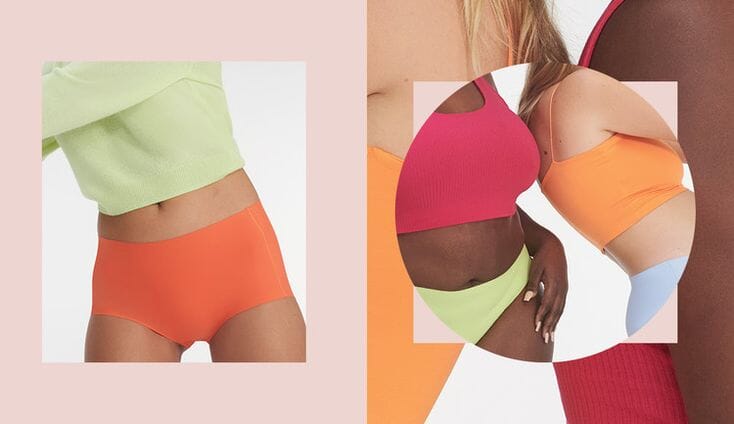
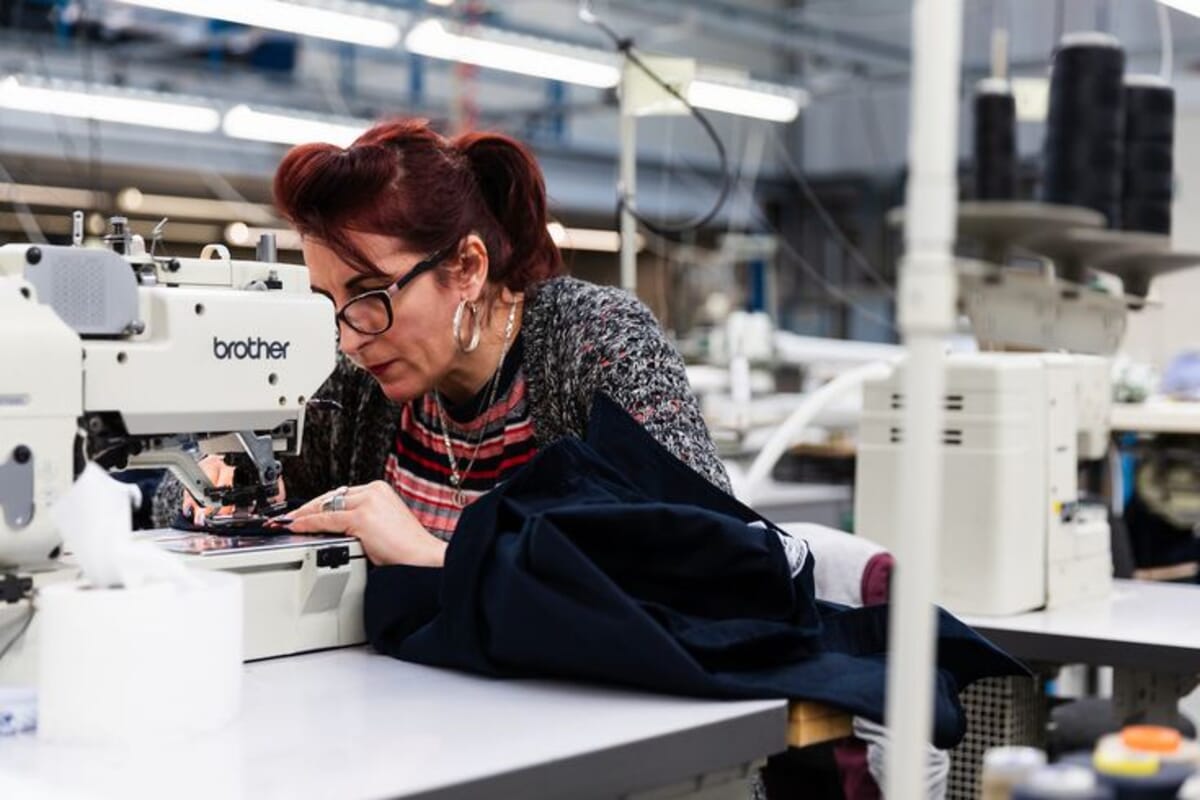
Brand manufacturers are factories that produce apparel or footwear for other companies' brand names, either from private-label templates or from custom brand designs. They handle production (cutting, sewing, finishing), quality control, and often trim/label/packaging work. They do not typically handle marketing, distribution, or retail. Those stay with the brand.
.jpeg?w=1200&format=optimal)
The global apparel market is valued at around USD 1.8 trillion, with the large majority of garment production in Asia. Portugal is one of Europe's larger producers, with EUR 5,499 million in textile and clothing exports (FFMS, PORDATA). An earlier version of this sentence gave the global figure in euros and put a precise Asian production share on it, neither of which the underlying sources support.
Brand manufacturers split into three service models:
| Model | What it means | Who it fits |
|---|---|---|
| Private label | Factory has existing product designs; brand adds custom label + colour | Fastest launches, lowest MOQ, low differentiation |
| CMT (cut-make-trim) | Brand supplies fabric + trims + tech pack; factory produces | Brands with fabric relationships, higher differentiation |
| Full package (FPP) | Factory sources fabric + trims + produces from brand's tech pack | Most brands; balance of differentiation and control |
| White label | Similar to private label but higher customisation (colour, print, small design tweaks) | Bridge between private label and custom |
Sources: PCF factory group data (2024-2026), industry references.
When Should Brands Use Private Label vs Custom Production?
Private label wins when: you're testing a product-market fit, launching fast, or working with under €10,000 of launch capital. Custom production wins when: you have product differentiation, target premium retail prices, or plan to scale beyond 3,000 units per style.
| Factor | Private label | Custom production (CMT or FPP) |
|---|---|---|
| Launch timeline | 4-8 weeks | 12-24 weeks |
| MOQ per style | 25-100 units | 100-300 units |
| Per-unit cost (tee example) | €12-22 | €7-12 |
| Design differentiation | Limited (colour + label) | Full brand control |
| Product-market fit testing speed | Fast | Slow |
| Retail multiplier support | 2-3× typical | 3-5× typical |
| Scale ceiling | Limited (factory templates) | High (bespoke to brand) |
Sources: PCF factory group data (2024-2026), industry references.
The most common emerging-brand mistake is starting private-label and staying private-label past year 2. Private label works for validation. But at year 2, customer expectations rise, and the same private-label product now competing with 20 other brands using the identical template stops differentiating. The migration to custom production between year 1 and year 2 defines whether a brand builds long-term equity or plateaus.
What Should Brands Evaluate in a Manufacturer?
Six things separate a good brand manufacturer from a poor one:
- Tech pack literacy. Can they read and produce from a properly-formatted tech pack? Ask for their tech pack format spec. If they don't have one, they're not equipped for custom production.
- Fabric mill relationships. Do they source direct from mills or through distributors? Distributor markups add 15-30% to fabric cost. See our fabric sourcing guide for how to find mill-direct qualities.
- QC discipline. What's their AQL (Acceptable Quality Level)? Our guide to quality control on a production run covers how this is actually enforced. Industry standard is AQL 2.5 for major defects. Anything worse than AQL 4.0 signals quality problems.
- Sample cycle transparency. How many rounds do they typically run? 2-3 for standard, 4-6 for complex. Endless sample rounds signal weak factory-side vetting.
Certification and compliance checks
- Certification depth. At minimum OEKO-TEX Standard 100. For sustainability positioning, GOTS or GRS.
- Social compliance. Sedex SMETA or BSCI audit at minimum. Fair Wear Foundation for premium positioning.
What certifications the group actually holds
Across the 80 documented Portuguese factories in the group, certification coverage looks like this: 70% hold OEKO-TEX Standard 100, 22% hold GOTS, 20% hold GRS, 65% carry BSCI or SA8000 social compliance, 45% have ZDHC-compliant wet processing chemistry, 30% carry bluesign System Partner status. Emerging brands should target factories with at least 3 of these 6 certification stacks.
What Do Brand Manufacturers Cost?
Costs vary by category, MOQ tier, and complexity. Here are typical EUR CMT ranges at Portuguese factories at 300 MOQ:
| Product category | CMT at 300 MOQ | Full FPP typical range |
|---|---|---|
| Basic t-shirt | €2.20-3.80 | €7.50-12 |
| Premium t-shirt (240 GSM) | €4-6 | €12-19 |
| Basic hoodie | €8-14 | €18-30 |
| Premium heavyweight hoodie (500 GSM) | €14-22 | €30-50 |
| 5-pocket jean (12oz) | €11-18 | €22-40 |
| Cotton chino trousers | €7-12 | €18-30 |
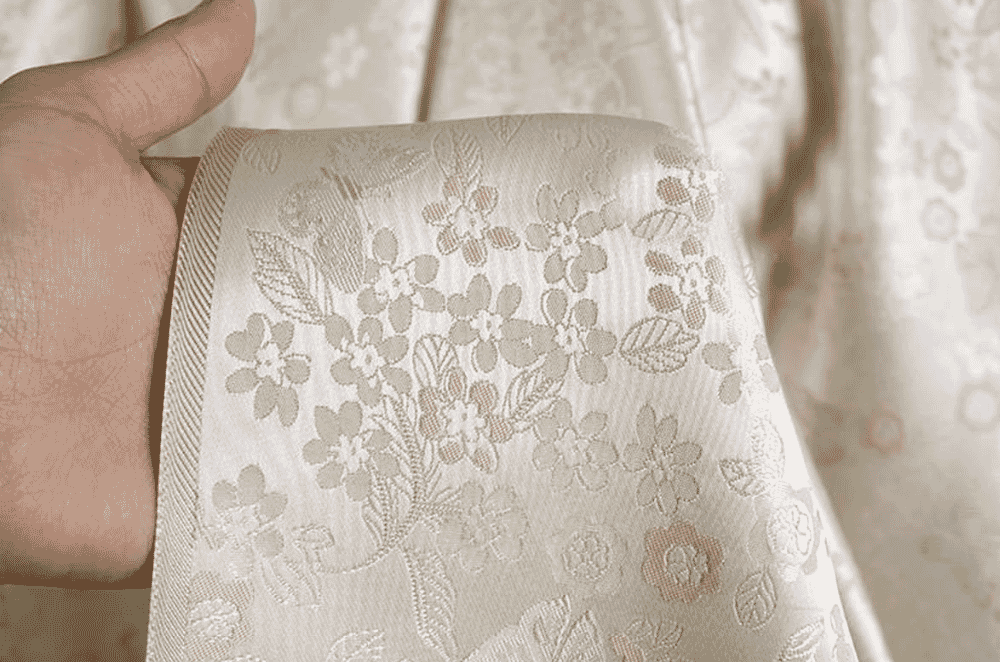
| Silk blouse | €12-22 | €35-70 |
| Structured blazer | €38-72 | €95-180 |
| Yoga leggings (nylon-elastane) | €13-19 | €22-42 |
| Cycling jersey (technical knit) | €8-15 | €18-38 |
Sources: PCF factory group data (2024-2026), industry references.
Realistic launch investment for a 5-style custom production collection at 300 MOQ each = €25,000-60,000 all-in depending on category mix.
How Do You Place Production with the Right Manufacturer?
Small brands routinely lose 4-8 weeks on the sourcing process because they email 50 factories and get 12 replies with inconsistent data. A working placement process:
- Draft a tech pack for at least one hero product (spec, measurements, fabric callout, colour spec, care label plan). Without a tech pack, factory quotes are just noise.
- Filter factories by category expertise + MOQ tier + certification stack. Don't approach a knit-specialist factory for structured tailoring.
- Request quotes from 3-5 factories that fit the filter. Not 50. Just 5. Better to have 5 comparable quotes than 20 non-comparable ones.
- Order a first sample from 2-3 short-listed factories. Sample cost typically €80-300. This is where the real evaluation happens.
- Choose the factory based on sample quality + responsiveness, not just price. A €0.30 per-unit CMT saving that ships poor QC bulk costs 5× the initial saving.
What sample-round behaviour tells you
The factories with the most professional sample-round communication are almost always the factories that deliver the best bulk quality. This is not a coincidence. Sample-round discipline reflects internal management standards. Factories that ghost you during samples will ghost you during bulk.
Talk to our team: Get in contact and we'll tell you which 2 to 3 factories in our group actually fit your brief.
How Do Portuguese Brand Manufacturers Cluster by Category?
Portuguese brand manufacturers do not compete as a single pool. The northern textile cluster splits into category sub-clusters that most emerging brands miss when sourcing. The sector runs to roughly 11,965 companies employing about 118,000 people (FFMS, PORDATA), and the cluster geography maps closely to product specialisation. Figures of 12,000 firms and 130,000 workers circulate widely online, including in earlier versions of our own pages, so we have moved to the published statistical series.
Ave Valley (Guimarães, Vila Nova de Famalicão, Vizela). Cotton knitwear specialists. T-shirts, sweatshirts, hoodies, jersey dresses. Our t-shirt factory guide goes deeper on that category. Named mills in this sub-cluster: Somelos (cotton yarn and woven shirting, Guimarães), Riopele (technical wovens, Vila Nova de Famalicão) and Tintex (bio-based knits and jersey, Vila Nova de Cerveira). Lameirinho, also in Guimarães, is a home-textile producer rather than an apparel jersey mill, and earlier versions of this page listed it as one. Highest GOTS certification density in Portugal.
Barcelos
Barcelos. Cut-and-sew volume specialist. Basic knits and wovens at 500-3,000 MOQ. Best value tier for standard programs. Impetus sits in this sub-cluster for seamless knit and underwear-adjacent programs.
Porto and Vila do Conde
Porto and Vila do Conde. Premium small-batch cut-and-sew plus finishing. Faster sample cycles because of proximity to Porto airport and Leixões port. Higher concentration of GOTS and OEKO-TEX at the low-MOQ tier.
The Guimaraes denim sub-cluster
Guimarães denim sub-cluster. Denim finishing, garment washing and laser distressing. Named wet processors include Adalberto in Vila das Aves. Verify any certification claim on the issuing body's own database rather than a factory PDF.
Braga and Sao Joao da Madeira
Braga and São João da Madeira. Wovens (shirts, trousers, tailoring) and footwear. São João da Madeira is Portugal's historical shoe capital.
Covilhã (Serra da Estrela). Wool and technical outerwear. Higher-mountain climate historically drove wool production.
| Sub-cluster | Category strength | MOQ sweet spot | Named factories or mills |
|---|---|---|---|
| Ave Valley (Guimarães, Famalicão) | Cotton knits, GOTS organic | 200-1,000 | Somelos, Riopele, Tintex |
| Barcelos | Volume cut-and-sew, seamless knit | 500-3,000 | Impetus, mid-size producers |
| Porto / Vila do Conde | Premium small-batch | 100-500 | Premium cut-and-sew specialists |
| Guimarães denim | Denim wash + finishing | 300-1,000 | Adalberto and other wet processors |
| Braga | Wovens, tailoring | 200-1,000 | Woven shirt specialists |
| São João da Madeira | Footwear | 300-1,500 | Footwear specialists |
| Covilhã | Wool, outerwear | 300-1,500 | Wool blend specialists |
Sources: PCF factory group data (2024-2026), ATP cluster mapping.
Citation Capsule: Portuguese brand manufacturers concentrate in seven category sub-clusters. Ave Valley (Guimarães, Vila Nova de Famalicão) leads cotton knits and GOTS organic, with Tintex the jersey specialist among the named mills. Barcelos delivers volume cut-and-sew. Porto and Vila do Conde run premium small-batch. Guimarães hosts the denim wash cluster including Adalberto. Braga and São João da Madeira cover wovens and footwear, and Covilhã carries the wool and outerwear specialists.
What Are the Real Wholesale Margin Scenarios?
Brand manufacturers only work as an economic model when the retail multiplier holds. Across 2024-2026 PCF factory group data, the retail multiplier reality for Portuguese-produced apparel splits into three scenarios.
Scenario A: DTC-only brand at 3.5-4x retail multiplier.
- Standard 180 GSM tee FPP: €8.20
- DTC retail: €32 (3.9x multiplier)
- Gross margin per unit: €23.80 (74%)
- Break-even on 300-unit run: sell roughly 140 units after ad cost
Scenario B: DTC plus wholesale
Scenario B: DTC plus small wholesale at 4.5-5x retail multiplier.
- Same tee FPP: €8.20
- Wholesale price: €18 (2.2x multiplier)
- Retail (via boutique): €40-45
- Blended gross margin: 60-65%
Scenario C: wholesale-first
Scenario C: Wholesale-first at 2.5x wholesale, 5-6x retail multiplier.
- Premium 240 GSM tee FPP: €14.50
- Wholesale price: €36 (2.5x multiplier)
- Retail (department store): €85-95 (6x multiplier)
- Wholesale gross margin: 60%
- Requires OEKO-TEX + BSCI at minimum, GOTS or GRS for sustainability-labelled retail
| Positioning | FPP target | Wholesale target | Retail target | Multiplier | Feasible category examples |
|---|---|---|---|---|---|
| Value DTC | €4-7 | n/a | €18-28 | 3.5-4x | Basic tees, socks |
| Standard DTC | €8-14 | n/a | €32-55 | 3.5-4x | Standard tees, hoodies, sweatshirts |
| Premium DTC | €15-30 | n/a | €60-120 | 4-5x | Heavyweight tees, structured knits |
| Wholesale-DTC hybrid | €8-20 | €18-45 | €45-110 | 5x retail | Premium basics, sweatshirts |
| Wholesale-first premium | €15-40 | €35-95 | €85-220 | 5-6x retail | Tailoring, silk, cashmere |
| Luxury wholesale | €40-120 | €100-280 | €250-680 | 6-7x retail | Fully-canvassed tailoring, luxury knits |
Sources: PCF factory group data (2024-2026), industry multiplier benchmarks.
Cost trap: Brands that price at a 3x retail multiplier (€28 retail on €9 FPP) rarely survive the paid-acquisition cost curve. Once paid acquisition is in the mix, most brands need at least 3.5x and more commonly 4x to keep payback inside a quarter. A Grand View Research DTC benchmark cited here previously has been withdrawn: Grand View publishes market sizing, not acquisition-payback benchmarks.
Citation Capsule: DTC-only tees need a 3.5-4x retail multiplier to survive paid-acquisition payback under 90 days. Wholesale-DTC hybrid programs need 5x at retail with a 2.2x wholesale price. Wholesale-first premium needs 5-6x retail plus a 2.5x wholesale multiplier. Brands pricing at 3x rarely sustain unit economics past year 2.
What Common Brand-Manufacturer Mistakes Cost the Most?
Six recurring mistakes account for most avoidable margin loss the PCF factory group sees at first-time brands.
Emailing 30-50 factories without a tech pack. Response quality drops to noise. Cost impact: 4-8 weeks of wasted sourcing time.
Choosing a single factory across all categories. A knit specialist forced to produce wovens or structured tailoring delivers weak quality and slow cycles. Place each category with the sub-cluster built for it.
Skipping the pre-production sample before locking bulk. Even at 100-unit MOQ, the pre-production sample is the cheapest insurance on the order: a defect caught there costs one garment, the same defect found at final inspection costs the run. A precise average saving per style was previously given here and has been withdrawn, because we do not track defect cost at that resolution.
Certification and scheduling mistakes
Under-specifying certifications at launch. Retail buyers routinely reject unlabelled OEKO-TEX or GOTS at wholesale onboarding. Adding certification 12-18 months later requires re-sourcing fabric and re-running samples. Cost impact: 8-12 weeks lost plus re-sourcing fees.
Ignoring the August shutdown when planning Q3/Q4 launches. Most Portuguese factories close 2-4 weeks in August, which our lead time guide puts in the context of a full calendar. A PO placed 10 July for October delivery routinely misses target.
Costing mistakes
Booking bulk on the lowest CMT quote without checking fabric route. Distributor-sourced fabric silently adds 15-30%. Insist on the FPP breakdown (fabric + CMT + trims + samples) not the CMT alone.
Should You Manufacture in Portugal or Elsewhere?
Choose Portugal for brand manufacturing when:
- Volume sits between 100 and 5,000 units per style
- Sustainability certification is required, and our comparison of OEKO-TEX, GOTS and bluesign sets out what each covers
- EU retail is the primary market
- Sample cycle discipline matters more than absolute lowest CMT
- Total lead time under 14-18 weeks is a hard requirement
- Category is cotton knit, denim, wool blend, silk, or premium tailoring
Consider Turkey when:
- Volume between 1,000 and 15,000 units per style
- Denim, wovens, or basic activewear anchor the range
- Faster large-batch lead times matter more than certification depth
- Retail price €20-60
Consider China (Tier 1 direct-factory only) when:
- Volume exceeds 10,000 units per style
- Highly technical construction (bonded outerwear, 3D-knit)
- US retail with HTS tariff exposure under 10%
- Working capital absorbs 4-6 months inventory financing
Consider Vietnam when:
- Volume exceeds 5,000 units per style
- US retail is primary and ASEAN sourcing favours HTS
- Technical outerwear or performance knit
Consider Morocco or Tunisia when:
- EU brand with focus on fast fashion or mid-market denim
- Volume between 2,000 and 20,000 units per style
- Lead time critical but certification depth less so
What Should You Do Next?
Two decisions decide whether this works. Pick the model that matches where you actually are: private label to find out whether the product sells, custom production once you know it does and need the margin and the differentiation. Then route each category to the sub-cluster built for it rather than asking one factory to cover a whole range.
Arrive with a tech pack, a realistic quantity and a shortlist of five rather than fifty, and the sourcing stage stops being the part that costs you a season.
Running into production issues? Get in contact and tell us what you're making. We're a group of documented Portuguese garment factories and we answer every serious brief within 24 hours.
Frequently Asked Questions About Brand Manufacturers
What's the difference between a brand manufacturer and a private-label manufacturer?
A brand manufacturer produces apparel to your brand's specifications (custom production). A private-label manufacturer produces from their existing product templates and applies your label. Custom = higher differentiation, higher effort. Private label = faster launch, lower cost to start, less differentiation.
How do I find a good brand manufacturer in Portugal?
Look for factories that hold OEKO-TEX + BSCI at minimum, work with named cotton mills (Somelos, Impetus, Lameirinho, etc. in Portugal), have transparent MOQ tiers, and offer sample rounds under 4 weeks per round. Portuguese factory groups (like PCF) place each brand's production with the specific factory in their group built for the product category rather than a single-factory model.
What's the realistic budget to launch a clothing brand with a manufacturer?
For 5 styles at 300 MOQ each in custom production: €25,000-60,000 all-in depending on category (basics = lower end, tailored/technical = higher end). Add 20-30% for fabric booking + trim/packaging + sample rounds + shipping.
Can a brand manufacturer help with product design?
Some do (typically private-label manufacturers with in-house design teams), most don't (specialist custom manufacturers expect the brand to supply the tech pack). Assume you need to supply a tech pack unless the factory explicitly advertises design services.
How many factories should a brand work with?
Typically 2-4 for a full apparel line: one for knits (t-shirts, hoodies, sweatshirts), one for wovens (shirts, trousers, dresses), one for outerwear (jackets, coats), one for specialty (swimwear, lingerie, technical). A factory group model (like PCF) can place production across categories from a single relationship.
We're a group of 80 documented Portuguese clothing factories, 25 verified, based in Porto and Guimarães. Tell us your product, volume, and timeline. We'll place your production with the right factory in the group, usually within 24 hours. Flat fees, no commissions, no upsell.
Get in contact Download the directory (€39)Need a tech pack? Get a factory-ready single-style tech pack for €79. See what's included.
Related reading
- Private label vs custom manufacturing The decision this whole guide turns on, in detail
- Choosing a manufacturer as a startup First-order timeline, cash requirement and the mistakes that cost months
- How to find a clothing manufacturer Where the shortlist actually comes from
- CMT vs full package production What each quote basis includes
- Minimum order quantities in Portugal The real distribution across 80 documented factories
- Red flags when choosing a manufacturer What to screen for before committing a deposit
Sources used in this article
- Textile Exchange - Preferred Fiber and Materials Market Report (2024)
- ATP - Associação Têxtil e Vestuário de Portugal, industry data (2025)
- EURATEX - European Apparel and Textile Confederation, Facts & Key Figures (2024-2025)
- CITEVE - Centro Tecnológico das Indústrias Têxtil e do Vestuário de Portugal (2024)
- OEKO-TEX - Standard 100 baseline testing criteria
- PCF internal factory documentation (2024-2026) - Data from 80 documented Portuguese factories in our group
Portugal Clothing Factory is a group of 80 documented Portuguese clothing factories in the northern textile cluster (Porto, Guimarães, Braga, Barcelos, Famalicão), 25 audited. We place brand production with the factory in the group built for your product. Get in contact or download the factory directory (€39).