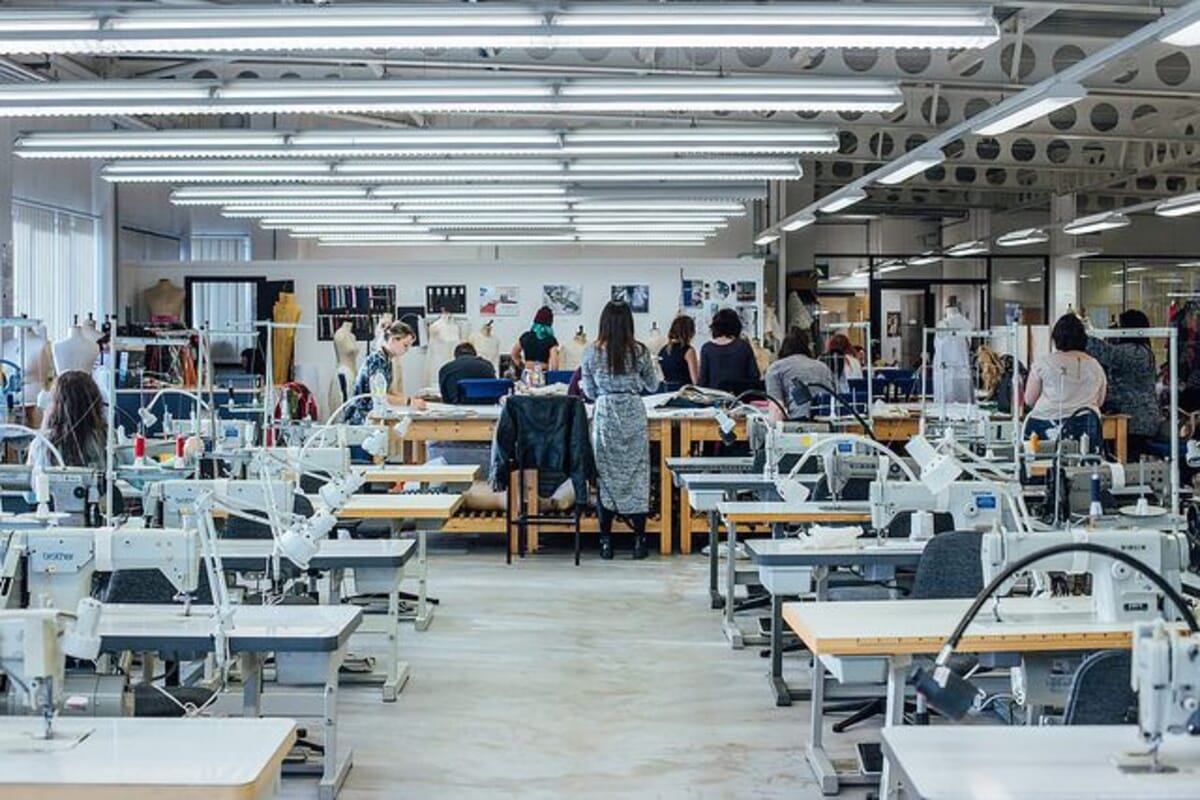
Quality control decides whether your production run lands as a hero product or a refund nightmare. Across the 80 factories in our own group we record final-QC reject rates of 1 to 2.5% on premium-tier work; brands arriving from elsewhere report rates as high as 5 to 12% from their previous suppliers. Treat the first figure as measured and the second as reported, because we only hear from brands who had a reason to move. No trade body publishes national defect-rate averages, so be sceptical of any article that quotes one.
The cost of getting this wrong is well documented. Research on cost of quality in apparel found participating factories losing an average of 14.05% of annual sales to quality costs, with almost 10% of sales going on internal and external failure, and puts total cost of quality at 20 to 25% of manufacturing cost (Fibre2Fashion). On the consumer end, about 13% of online apparel returns happen because the customer received faulty goods. A pre-shipment inspection costs EUR 200 to 500; the section below works through what it saves.
This guide walks through how clothing quality control in Portugal actually works on the factory floor. We'll cover AQL sampling, the four main checkpoints, common defects with photo-grade examples, third-party inspection costs and providers, contract clauses that protect you, and the dispute resolution playbook when things go wrong despite all that. If you're new to sourcing, pair this with our textile production Portugal guide.
Heads up: We're Portugal Clothing Factory, a group of 80 documented Portuguese clothing factories in Porto and Guimarães. Since 2021, we've placed dozens of brands with these factories, so the practical observations in this article are based on first-hand sourcing experience.
Key Takeaways
- We measure 1 to 2.5% final-QC reject rates across our own Portuguese group; incoming brands report 5 to 12% from prior suppliers elsewhere. No trade body publishes a national average
- A proper QC workflow has four checkpoints: fabric inspection, pre-production approval, in-line inspection, and final random inspection (FRI)
- AQL 2.5 is the industry standard for apparel (ISO 2859-1)
- Third-party inspections in Portugal cost roughly €150-€400 per day via SGS, Bureau Veritas, or Intertek
- An inspector can only reject against a stated tolerance, so every point of measure in your tech pack needs a number and a plus-or-minus
- Never accept a QC report without photos, sampling plan, and defect categorisation
- Cost of poor quality runs roughly 2-6% of order value caught at final inspection against 8-22% caught after shipment, on the build-ups below
Try it free: Pressure-test your production cost with our garment cost calculator. 60 seconds, no email required.
What Is Quality Control in Clothing Production?
Quality control in clothing production is the system of inspections, sampling and documentation used to catch defects before garments reach the customer. It is not a marginal cost: studies of cost of quality in apparel put the total at 20 to 25% of manufacturing cost, with roughly 10% of sales absorbed by internal and external failure (Fibre2Fashion). QC covers fabric, construction, measurements and finishing.
People confuse QC with QA, but they're different disciplines. Quality Assurance (QA) is the prevention layer: tech packs, process controls, training, calibrated equipment. Quality Control (QC) is the inspection layer: physical checks on fabric rolls, cut panels, stitched garments, and finished units. Portuguese factories typically run both, with CITEVE-trained staff leading QA and dedicated inspectors handling QC.
AQL, the Language of Apparel Inspection
AQL stands for Acceptance Quality Limit, the wording used in ISO 2859-1 itself; "acceptable quality level" is the older MIL-STD phrasing you will still see quoted. It sets how many nonconforming units in a random sample justify rejecting the whole lot. AQL 2.5 is the apparel default for major defects. Read it off the table, not from memory: a 1,000-unit lot at general inspection level II draws an 80-piece sample, and it fails at 6 major defects, not at 10. The 10-defect figure belongs to a 200-piece sample, which applies to lots of 3,201 to 10,000.
AQL Sampling Table (ISO 2859-1, General Inspection Level II)
| Lot size | Sample size | AQL 1.5 (Accept/Reject) | AQL 2.5 (Accept/Reject) | AQL 4.0 (Accept/Reject) |
|---|---|---|---|---|
| 91-150 | 20 | 1 / 2 | 1 / 2 | 2 / 3 |
| 151-280 | 32 | 1 / 2 | 2 / 3 | 3 / 4 |
| 281-500 | 50 | 2 / 3 | 3 / 4 | 5 / 6 |
| 501-1,200 | 80 | 3 / 4 | 5 / 6 | 7 / 8 |
| 1,201-3,200 | 125 | 5 / 6 | 7 / 8 | 10 / 11 |
| 3,201-10,000 | 200 | 7 / 8 | 10 / 11 | 14 / 15 |
| 10,001-35,000 | 315 | 10 / 11 | 14 / 15 | 21 / 22 |
Source: see in-text citations in this section.
For a 1,000-piece order at AQL 2.5, the inspector samples 80 pieces; if 6 or more major defects are found, the batch fails. This is the math that drives QC reports.
Pre-Production vs In-Line vs Final Inspection
Pre-production checks cover fabric and trims before cutting begins. In-line inspection samples garments while sewing is active, usually when 20 to 60% of the batch is complete. Final inspection, often called FRI (Final Random Inspection), happens when 80% or more is packed. Skipping a stage does not just risk missing defects; it removes the only point at which a systemic fault can still be corrected cheaply. A machine producing skipped stitches found at in-line inspection costs a partial rework; found at final inspection it is the whole batch.
Citation Capsule: Under ISO 2859-1 at general inspection level II, a 1,000-unit apparel lot is inspected by drawing an 80-piece sample. At AQL 2.5 the lot is accepted on 5 or fewer major defects and rejected at 6. At AQL 1.5 the thresholds tighten to accept 3, reject 4; at AQL 4.0 they loosen to accept 7, reject 8. AQL 2.5 is the apparel baseline, and the sample size depends on lot size, so always check the row before agreeing an inspection plan.
Running into production issues? Get in contact and tell us what you're making. We're a group of Portuguese factories and we answer every serious brief within 24 hours.
What Are the 4 QC Checkpoints in Portuguese Production?
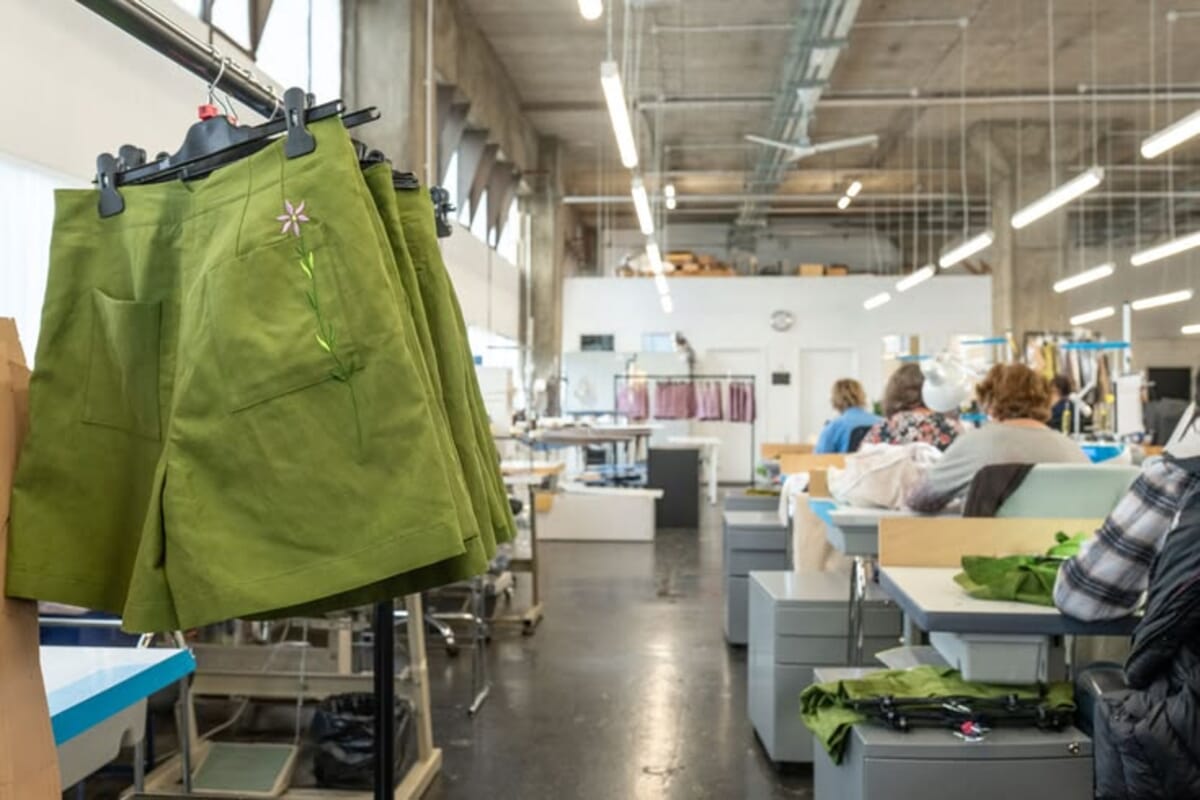
A well-run Portuguese factory inspects garments at four distinct checkpoints. We cannot tell you what share of the national industry does this, because nobody publishes that, but it is the structure we see in the factories we place into and the one you should ask a new supplier to describe before you sign. The reason it matters is arithmetic rather than culture: each checkpoint is a point where a fault can still be corrected on part of the batch instead of all of it.
Checkpoint 1: Fabric Inspection on Mill Delivery
When fabric rolls arrive from the mill, inspectors check them against the tech pack: weight (GSM), width, shade continuity, shrinkage, and visible flaws. In our experience, around 4 to 7% of incoming fabric rolls in Portugal fail first inspection, usually due to shade variation between rolls. Rejecting the roll here saves cutting a useless batch.
Checkpoint 2: Pre-Production Meeting and First-Piece Approval
Before bulk sewing begins, the factory stitches one full garment using bulk fabric and trims. This "golden sample" or first-piece is measured against the tech pack and approved by both sides. Skipping first-piece approval is one of the most common causes of full-batch rejection, so insist on it. For what to agree before a first order, see our guide to finding and vetting a manufacturer.
Checkpoint 3: In-Line Inspection During Sewing
In-line inspectors walk the sewing line and pull random pieces from the work-in-progress. Catching a broken stitch pattern at 30% completion means 70% of the batch can still be saved. We've seen in-line inspection save multiple runs where a single machine was creating skipped stitches on sleeve seams, something final inspection alone would have caught too late.
Checkpoint 4: Final Random Inspection (FRI)
The FRI happens when the order is at least 80% finished and packed. Inspectors randomly pull units based on AQL sampling, inspect them for visual, dimensional, and construction defects, and issue a pass, fail, or hold result. The FRI report is what you should always request before authorising shipment.
What Each Checkpoint Catches Best
| Checkpoint | Best at catching | Cost to fix at this stage |
|---|---|---|
| Fabric inspection | Shade variance, GSM mismatch, fabric defects | Lowest (€0-€500: reject roll, source replacement) |
| First-piece approval | Pattern errors, fit issues, construction problems | Low (€200-€1,000: rework one piece, adjust setup) |
| In-line inspection | Systemic stitching/finishing errors mid-batch | Medium (€500-€3,000: rework partial batch) |
| Final Random Inspection | Aggregate quality, packing, labelling, final spec | Higher (€1,000-€8,000+: full rework or rejection) |
Source: see in-text citations in this section.
The point is the cost gradient, and it is visible in the fix-cost column: a rejected fabric roll costs you the roll, a systemic stitching fault caught in-line costs a partial rework, and the same fault caught at final inspection costs the batch. The inspection fee that prevents the third outcome is the cheapest line on the whole order.
What Does AQL Mean in Practice?
AQL sets the threshold at which a lot is rejected, and the level you pick changes both the inspection cost and how much defective product can pass. One thing worth being precise about: AQL is not a promise about outgoing quality. It is a decision rule on a sample. A lot that passes at AQL 4.0 can still contain a materially higher share of defects than one that passes at AQL 1.5, because the acceptance threshold on a 200-piece sample moves from 14 defects to 7. Most apparel brands settle on 2.5.
AQL 1.5: Premium and Technical Garments
AQL 1.5 is strict, and is used for premium outerwear, technical activewear and medical apparel. On a 1,000-unit lot the 80-piece sample allows 3 major defects and rejects at 4, against 5 and 6 at AQL 2.5. Expect slightly longer inspection time, because more units get measured rather than glanced at. Brands selling at €150+ retail price points should default to AQL 1.5; the inspection cost is small relative to the brand-trust cost of defective product reaching customers.
AQL 2.5: Standard Apparel
AQL 2.5 is the apparel default. It covers most casualwear, knitwear, and fashion basics. On a 200-unit sample drawn from a 1,000-unit order, 10 major defects trigger rejection. If your factory proposes AQL 2.5 without asking, they're following the norm, not cutting corners.
AQL 4.0: Promotional and Low-Cost Goods
AQL 4.0 is loose. It's used for giveaways, uniforms, and deep-discount lines. It allows up to 14 major defects per 200-unit sample. Don't use AQL 4.0 for anything a customer will pay full retail for, because the visible defect rate will hurt your returns.
Recommended AQL by Garment Category
| Category | Recommended AQL | Reason |
|---|---|---|
| Premium tailoring (blazers, suiting) | AQL 1.5 | Visible quality matters at €200+ retail |
| Outerwear (coats, jackets) | AQL 1.5 | Construction-heavy, defects compound |
| Activewear / performance | AQL 1.5 | Technical fabrics, performance claims |
| Babywear (Class I) | AQL 1.5 | Safety-critical, regulatory exposure |
| Premium knitwear (cashmere, wool) | AQL 1.5 | High retail price, visible quality |
| Mid-market fashion (€60-€150 retail) | AQL 2.5 | Industry standard, balanced cost |
| Basic T-shirts, polos | AQL 2.5 | Standard apparel default |
| Hoodies, sweatshirts | AQL 2.5 | Construction simpler, defects more forgiving |
| Lingerie / underwear | AQL 1.5 or 2.5 | Skin contact requires tighter spec |
| Promotional / giveaway | AQL 4.0 | Cost-driven, defects acceptable |
Source: see in-text citations in this section.
Citation Capsule: Tightening from AQL 2.5 to AQL 1.5 on a 5,000-unit lot moves the rejection threshold on the 200-piece sample from 11 major defects to 8, so fewer marginal lots pass. It does not guarantee a specific outgoing defect count, because AQL governs the accept-or-reject decision on a sample rather than the quality of the units shipped. AQL 2.5 remains the apparel baseline.
What Defects Do Portuguese Factories Catch?
Portuguese QC teams catch a predictable set of defects, and knowing the list helps you read an inspection report faster. We are not going to attach percentages to them: we have seen this list quoted with a precise breakdown in several places, including our own earlier version of this page, and it does not trace back to any published study. What follows is the set of faults that recur, with what each one usually indicates. Most are fixable before shipment if caught early.
The defects that recur most
- Broken or skipped stitches. Usually a timing or tension issue on one machine, which is why it tends to cluster on one operation rather than scatter randomly. Catching it in-line means the machine gets reset and only part of the batch needs rework.
- Uneven hems. Often operator technique on curved hems. Check the measurement differential between left and right rather than eyeballing it.
- Colour variance between panels. Nearly always a fabric problem that should have been caught at roll inspection, and the reason to specify a single dye lot on the PO.
- Loose or trailing threads. A finishing and trimming issue. Cheap to fix, and a reasonable proxy for how much care the finishing table is taking.
- Zipper or closure malfunction. Usually the trim supplier, not the factory. Ask which zip brand is being used and test the pull yourself on the sample.
- Label misplacement or missing labels. Almost entirely preventable with a tech pack that gives label position as a measurement from a named reference point.
Defect Categorisation: Critical vs Major vs Minor
Inspectors grade each defect as critical (unsafe or unsellable), major (visible and likely to cause a return), or minor (noticeable only on close inspection). AQL thresholds apply separately to major and minor counts. Critical defects usually trigger automatic rejection at any AQL level.
| Severity | Definition | Typical examples |
|---|---|---|
| Critical | Safety risk or functionally unsellable | Open seams in load-bearing area, exposed needles, missing essential parts, choking hazards in babywear |
| Major | Visible on customer inspection, likely to cause return | Uneven hems, broken stitches in visible areas, colour variance, missing buttons, wrong size labels, fabric holes |
| Minor | Noticeable on close inspection but unlikely to drive return | Slight thread tension variation, small loose threads, minor label misalignment under 3mm |
Source: see in-text citations in this section.
Examples by Garment Category
For a basic T-shirt:
- Critical: hole in the body fabric, missing care label
- Major: skipped stitches in the armhole visible from outside, hem differential over 5 mm
- Minor: slight tension variation in the collar binding
For a structured blazer:
- Critical: broken seam at the shoulder, missing canvas in the chest panel
- Major: lapel symmetry out by more than 3 mm, sleeve length differential over 5 mm, lining tension visible from outside
- Minor: small thread on the lining, button placement variation under 2 mm
What's the Real Cost of Poor Quality?
Brands consistently underestimate the cost of QC failures. Realistic cost-of-poor-quality calculations based on our pipeline observations:
Pre-Shipment Discovery (FRI catches the issue)
| Cost item | Typical range |
|---|---|
| Inspection fee | €200-€500 |
| Rework cost (per affected piece) | €1.50-€8 |
| Delay cost (1-2 week shipment delay) | 2-5% of order value |
| Total impact | 2-6% of order value |
Source: see in-text citations in this section.
Post-Shipment Discovery (caught at warehouse or by customer)
| Cost item | Typical range |
|---|---|
| Customer returns processing | 8-15% of returned units |
| Reverse logistics | €4-€8 per returned piece |
| Brand-trust damage | Hard to quantify, often 2-4x direct cost |
| Markdown / discount to clear remaining stock | 25-50% retail price reduction |
| Replacement production | Full re-order cost |
| Total impact | 8-22% of order value |
Source: see in-text citations in this section.
Comparing the two build-ups above, the post-shipment case runs roughly three to four times the pre-shipment case as a share of order value: 2 to 6% against 8 to 22%. On a EUR 30,000 order that is the difference between EUR 600 to 1,800 and EUR 2,400 to 6,600, against an inspection fee of EUR 200 to 500. The asymmetry, not the precision of any single figure, is the argument.
Should You Use Third-Party or Factory Self-Inspection?
Factory self-inspection covers the basics, but a third-party inspection adds something structurally different: the inspector is not the party whose invoice depends on the lot passing. That is the whole argument, and it does not need a percentage attached to it. The extra cost is usually modest against the order value.
When to Use SGS, Bureau Veritas, or Intertek
SGS, Bureau Veritas, and Intertek all operate inspection teams in Portugal. Expect to pay roughly €150-€400 per inspection day, depending on location and inspector seniority. Porto and Braga are cheaper than Lisbon. For a first order with a new factory, a third-party FRI is worth every euro.
Comparing Third-Party Inspection Providers
| Provider | Strengths | Typical fee (Portugal) | Best for |
|---|---|---|---|
| SGS | Fast turnaround, broad scope | €180-€350/day | Most apparel categories |
| Bureau Veritas | Strong on technical/performance | €200-€400/day | Outdoor, technical, activewear |
| Intertek | Detailed reports, strong on lab testing | €200-€380/day | Premium brands, regulated categories |
| AsiaInspection (now QIMA) | International scale | €220-€400/day | Brands with multi-region sourcing |
| Local independent inspectors | Lower cost, language fluent | €120-€280/day | Established brand-factory relationships |
Source: see in-text citations in this section.
For first orders or new factories, established firms (SGS, BV, Intertek) provide stronger documentation and dispute support. For ongoing relationships, local independent inspectors deliver good value.
When Factory Self-Inspection Is Enough
If you've worked with the same Portuguese factory for multiple seasons, their internal QC team (often CITEVE-trained) usually delivers reliable reports. In those cases, self-inspection plus a few random on-site visits works well. For what factories will and will not move on, see our MOQ in Portugal guide.
What Should You Ask For in a QC Report?
A QC report is only useful if it is specific, photographic and actionable. The practical test is whether you could hand the report to the factory and have them act on it without a phone call. A narrative summary saying "quality generally good, some loose threads" fails that test; a report with a defect code, a photo and a point-of-measure table passes it. Here is what a complete report should contain.
Required Fields in a QC Report
- AQL level used and sampling plan (sample size, acceptable defect count)
- Pass, fail, or hold result with clear justification
- Photos of every flagged defect with reference codes (front, back, close-up of defect)
- Defect categorisation as critical, major, or minor
- Measurement check against the tech pack on a sample of 5 to 10 units, with POMs documented
- Packaging and labelling verification
- Recommended action: ship, rework, re-inspect, or reject
- Inspector signature and date
- Lab test results if applicable (composition, residue, colourfastness)
Sample QC Report Template Structure
INSPECTION REPORT - [Order #][Date] Order: 1,000 hoodies, GOTS organic cotton, navy
Factory: [Factory name], Vila Nova de Famalicão
Inspection date: 2026-05-08
Inspector: [Name], SGS Portugal
AQL level: 2.5 (general inspection II)
Sample size: 80 pieces from 1,000-piece lot RESULT: PASS / FAIL / HOLD: [decision] DEFECT SUMMARY:
- Critical: 0 of allowed 0
- Major: 4 of allowed 5 (PASS at AQL 2.5)
- Minor: 7 of allowed 10 (PASS at AQL 2.5) DEFECTS FLAGGED:
[Photo 1] DEF-001: Skipped stitches at right armhole (Major)
[Photo 2] DEF-002: Loose thread inside collar (Minor)
[continued] MEASUREMENT CHECK (5 units):
- Chest width: target 56cm ±1cm. Measured: 55.8, 56.2, 56.0, 55.9, 56.3 (all within tolerance)
- Sleeve length: target 64cm ±1cm. Measured: [...] PACKAGING/LABELLING: Verified compliant RECOMMENDED ACTION: Ship as packed
A real report adds 8-15 photos and detailed POM measurements. Anything less detailed than this template is incomplete.
How to Challenge a Report
If a report lacks detail, ask for the raw inspector notes and the sampling list. A reputable inspector will share both. Refusing to share raw data is a red flag we cover below.
Citation Capsule: A QC report that states the AQL level and sampling plan, categorises each defect as critical, major or minor, carries a photograph per defect and includes a point-of-measure table against the tech pack is actionable without further correspondence. One that offers a narrative summary is not, and it is also unenforceable if the order later becomes a dispute. Insist on the first kind before authorising shipment.
Which Tech Pack Fields Prevent QC Failures?
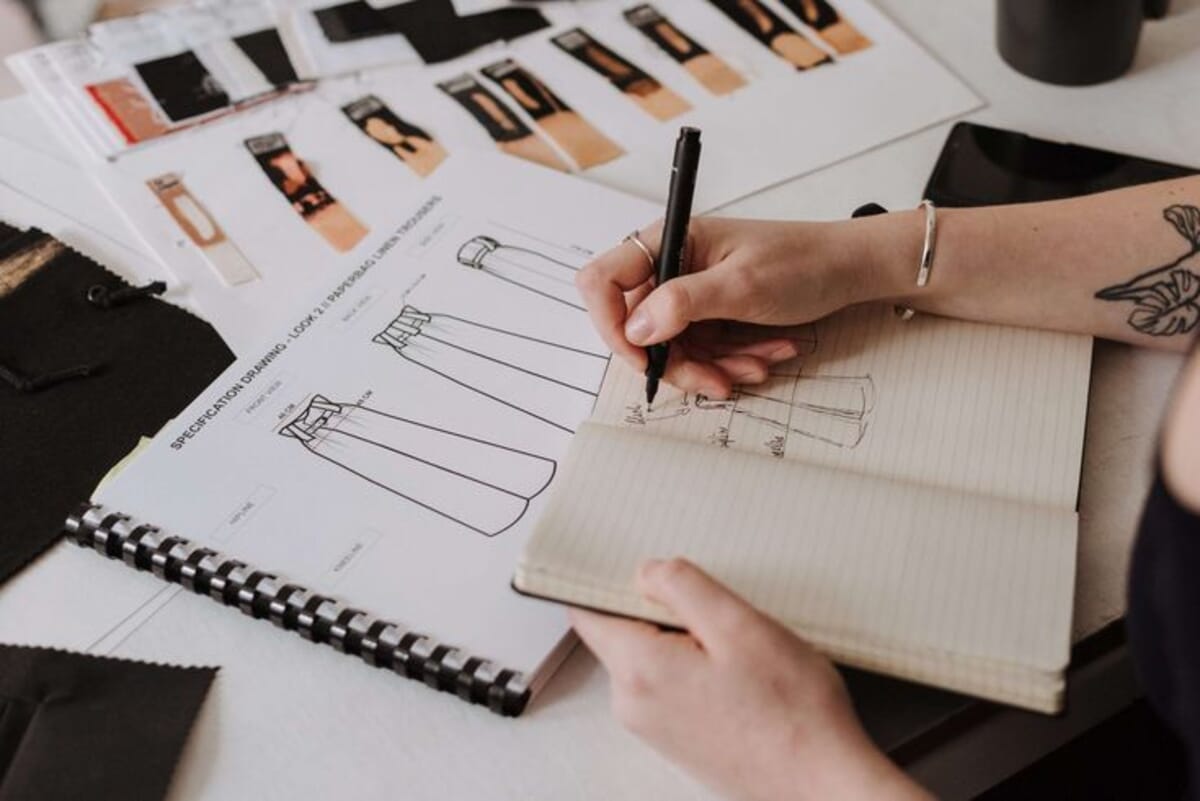
Most QC failures trace back to a vague or incomplete tech pack, for a simple reason: an inspector can only reject a garment against a stated tolerance. If your pack does not give a point of measure with a tolerance, there is nothing to fail against, and the argument becomes a matter of opinion at the worst possible moment. You will see a figure quoted for what share of rejections better documentation prevents; we have not found a published source for it and are not going to repeat it.
Fields QC Inspectors Rely On
- Point-of-measure (POM) table with tolerances (usually plus or minus 1 cm for knits, 0.5 cm for wovens)
- Stitch type and SPI (stitches per inch) for each seam
- Trim and label placement with measurements from reference points
- Fabric spec sheet: GSM, composition, shrinkage tolerance, colourfastness
- Acceptable colour variance: typically Delta-E under 1.5 for fashion apparel
- Wash care methodology specified
- Defect tolerance specification (e.g., "no holes >2mm in body fabric")
For what a factory-ready pack contains, see our tech pack service page, and pair it with guidance on CMT vs full package production to decide who owns which fields.
Need a tech pack? Get a factory-ready single-style tech pack for €79. See what's included.
Which QC Contract Clauses Protect You?
Most QC disputes happen because the contract doesn't specify what "passing quality" means. We strongly advise the following clauses in your production contract:
Essential QC Clauses
- Specific AQL level (e.g., "AQL 2.5 General Inspection Level II per ISO 2859-1")
- Sample size formula (e.g., "80 pieces sampled from each 1,000-piece lot")
- Defect classification (reference to standard definitions)
- Right to third-party inspection at brand's option
- Penalty structure for failed FRI (typical: 100% rework at factory cost; partial rework with discount; full rejection refund)
- Measurement tolerances (POM tolerances explicitly stated)
- Lab testing protocol (when applicable: composition verification, colourfastness, REACH)
- Packaging and labelling specifications
- Reject/rework timeline (typically 14-21 days for rework after failed FRI)
- Photo documentation requirements for all flagged defects
- Dispute escalation path (brand visit, third-party arbitration, ATP/ANIVEC mediation)
Recommended Penalty Structure
A reasonable penalty structure for a failed FRI:
| Failure type | Resolution | Cost responsibility |
|---|---|---|
| Minor defects exceeding AQL by <50% | Re-inspection after rework | Factory bears rework cost |
| Major defects exceeding AQL by 50-100% | Full batch rework | Factory bears rework + reinspection cost |
| Critical defects or >100% AQL excess | Reject batch / partial refund | Factory bears full production cost; brand may keep partial passing units at discount |
| Quality dispute, factory contests | ATP/ANIVEC mediation | Cost shared 50/50 until resolution |
Source: see in-text citations in this section.
Without these clauses, disputes default to negotiation, which favours the party with more leverage (typically the factory once production is complete and your deposit is paid).
Which Red Flags Predict QC Trouble?
Some factories look professional at first meeting but reveal QC weaknesses once you dig in. A 2023 Bureau Veritas survey across 200+ apparel factories found that five specific red flags predict post-shipment complaints with around 75% accuracy. Watch for these.
Five Red Flags
- Resistance to sharing inspection reports: a factory unwilling to show past QC data likely has something to hide
- Vague tolerance language: if the factory says "around 1 cm" instead of a written plus-minus, expect measurement disputes
- No PPE on the sewing line: no cut-resistant gloves, no eye protection, no fire exits marked. Often correlates with lax process discipline
- Disorganised fabric storage: rolls stacked without shade codes, humidity-exposed, or unlabelled. Expect shade variance problems
- No in-line inspection station: if the factory only inspects at the end, minor defects compound into batch-wide failures
For the extended checklist, read red flags when choosing a Portuguese manufacturer and compare with Portugal vs Bangladesh vs Vietnam manufacturing. Across production runs we've supported since 2022, factories flagged with two or more of the five red flags above produced roughly 2.4x the defect rate of factories that cleared the checklist, even when their quoted prices looked identical on paper.
What QC Mistakes Do Founders Make?
Across our pipeline, the recurring mistakes:
- Skipping the final inspection to save EUR 300 to 500. It is the one cost on the order that is smaller than the problem it prevents. Do not skip it on a first run with a new factory.
- Accepting verbal "we did QC" without a written report. Verbal claims aren't enforceable in dispute.
- Using AQL 4.0 because the factory suggests it. Standard apparel needs AQL 2.5 minimum. AQL 4.0 means visible defects.
- Not specifying measurement tolerances in tech pack. Leads to "approximately fits the spec" interpretations.
- Approving samples without measuring them. A sample that looks right may have 2cm fit deviation that compounds in bulk.
- No QC contract clause. Disputes default to negotiation; you lose leverage.
- Failing to photograph reference garment for comparison. When defects are subjective, photos resolve disputes.
- Not visiting factory during production for first orders. Even a 2-hour walkthrough during in-line phase materially reduces post-shipment defects.
The pattern: QC discipline is cheap when planned, expensive when neglected. Most mistakes cost €300-€2,000 to prevent and €4,000-€20,000 to recover from.
How Do You Handle a QC Dispute?
When a production run fails inspection or quality issues emerge post-shipment, here's the recovery playbook:
Step 1: Document Everything
Photo every defective piece. Document the specific defect type, location, and severity. Reference the tech pack tolerance that was missed. Without this documentation, you have no basis for negotiation.
Step 2: Identify Root Cause
Was it fabric (mill issue), construction (factory issue), specification (your tech pack was unclear), or operator error (factory training)? Different causes require different remedies. A construction defect from a single machine is fixable with rework; a systemic fabric issue may require a fresh batch.
Step 3: Engage the Factory Constructively
The first conversation should be: "Here's what we found. Here's what the contract specifies. Here's what we propose to resolve it." Not: "You failed; pay up." The constructive framing typically gets faster resolution.
Step 4: Offer Resolution Options
Three typical paths:
- Rework the defective units (factory absorbs cost, ships within 2-3 weeks)
- Partial shipment of passing units + discount on flagged units (you accept some risk in exchange for speed)
- Full rejection and refund (last resort, typically only for critical defects)
Step 5: Use Mediation if Needed
If direct resolution stalls, ATP and ANIVEC offer mediation services for member factories. Typical mediation resolves within 30-60 days vs 6-18 months for litigation. Most disputes resolve at this stage.
Step 6: Decide on the Relationship
Even with successful resolution, evaluate whether to continue with this factory. A single isolated incident is recoverable; a pattern of QC failures isn't. Document the issue in your supplier file for future reference.
Frequently Asked Questions
What brands ask us once a QC report lands: who pays for rework, what AQL to specify, whether the factory or the brand carries fabric faults, how to tell a real report from a summary, and what to do when the factory disputes the finding.
How much does a third-party QC inspection cost in Portugal?
Third-party final random inspections in Portugal cost roughly €150-€400 per day depending on the agency and region (SGS Portugal, 2024). Porto and Braga tend to be cheaper than Lisbon. For a standard 5,000-unit order, expect a one-day FRI covering AQL 2.5 sampling, photos, and a written report. Local independent inspectors can be cheaper (€120-€280/day) for established factory relationships.
What AQL level should I request for apparel?
AQL 2.5 is the apparel industry standard under ISO 2859-1 and covers most fashion, knitwear, and casualwear orders. Use AQL 1.5 for premium, technical, or medical garments. Only use AQL 4.0 for giveaways or promotional items where visual defects are commercially acceptable. Match AQL to your retail price point: €60-€150 retail = AQL 2.5; above €150 retail = AQL 1.5.
Do Portuguese factories really have lower defect rates than Asian factories?
On the evidence we have, yes, but be careful how that is stated. Across the 80 factories in our own group we measure final-QC reject rates of 1 to 2.5% on premium-tier work, and brands arriving from elsewhere report 5 to 12% from prior suppliers. No trade body publishes a national defect-rate average for either region, so treat single-figure country comparisons, including ones you may have read on this page previously, as unsourced. Smaller batch sizes, EU labour and safety regulation and CITEVE-backed training all plausibly contribute. Individual factory performance still varies, so always inspect.
When should in-line inspection happen?
In-line inspection should occur when sewing is 20 to 60% complete (Bureau Veritas, 2023). Too early and you don't have enough finished units to sample. Too late and fixing systemic errors wastes most of the batch. Mid-run inspection is the sweet spot for catching compounding defects.
Can I attend the final inspection myself?
Yes, most Portuguese factories welcome brand representatives on-site for FRI. If you can't travel, third-party inspectors send photo-rich reports within 24 to 48 hours. Video-call walkthroughs during FRI are increasingly common, especially for first-run orders where trust is still being established.
What happens if an order fails final inspection?
The factory usually has three options: 100% re-inspection and rework of defective units, partial shipment of passing units with rework for the rest, or full rejection. The contract should specify who pays for rework. Strong QC clauses in your initial agreement prevent expensive disputes later. Mediation through ATP or ANIVEC resolves most member-factory disputes within 30-60 days when direct negotiation stalls.
Is the cost of FRI worth it for small orders?
Yes, even more so for small orders. A €350 FRI on a 200-piece order is €1.75/piece. The post-shipment cost of failed product on a small order can easily reach €15-€30/piece in returns, brand damage, and replacement. The smaller the order, the higher the proportional cost of failure, which makes inspection more valuable, not less.
Should I do lab testing in addition to visual QC?
For most fashion apparel, visual + measurement QC at FRI is sufficient. Lab testing (composition verification, REACH compliance, colourfastness) becomes important for: babywear (Class I OEKO-TEX), products claiming organic content (GOTS verification), products with technical performance claims, products entering markets with specific regulatory requirements (medical, children's wear). Typical lab test cost: €150-€400 per fabric per test cycle.
What's the QC implication of working CMT vs full package?
CMT (you supply fabric) means fabric defects are your problem; the factory only inspects construction. Full package means the factory inspects fabric on incoming and is responsible for both layers. Brands moving to CMT often underestimate the additional fabric inspection burden; budget for mill-side fabric QC (€200-€500/inspection) when going CMT.
How do I know if my QC report is legitimate?
Legitimate QC reports include: inspector signature with credentials, AQL reference to ISO 2859-1, sample selection methodology, photographic evidence of every flagged defect, POM measurements with tolerances, and pass/fail decision with justification. If any of these are missing, request them. Legitimate inspectors share raw data willingly; illegitimate ones don't.
Conclusion
Quality control in Portuguese clothing production is a system, not a step. Fabric inspection, first-piece approval, in-line checks and final random inspection each catch a different class of defect, and each is the last point at which a given fault is still cheap to fix. Portugal's reputation on quality is real, but it is a property of individual factories rather than of the country, so verify it on your own order rather than inheriting it from an average.
What the discipline is worth
We cannot tell you what QC discipline adds to your margin, because we see production and placements rather than our clients' accounts. What the figures above do support is narrower and sufficient: an inspection fee of EUR 200 to 500 sits against a post-shipment cost of 8 to 22% of order value. On any order above a few thousand euros, that trade is not close.
What to actually do
Match the AQL to your retail positioning: 1.5 for premium, 2.5 for mid-market, and 4.0 only for promotional product where a visible defect rate will not cost you a customer.
Know your AQL. Demand standardised reports with photos. Use third-party inspectors when trust is still being built. Document tolerances in your tech pack. Build QC clauses into your contract. And treat your tech pack as the foundation that prevents most failures before they happen.
Worried about quality at your next production run? Submit your enquiry at portugalclothingfactory.com/contact or get in contact and we'll walk you through our QC protocol and place your production with Portuguese factories that take quality seriously.
We're a group of 80 documented Portuguese clothing factories based in Porto and Guimarães. Tell us your product, volume, and timeline. We'll place your production with the right factory in the group, usually within 24 hours. You work directly with the factory. No commissions, no pitch, no upsell.
Get in contact Download the directory (€39)Need a tech pack? Get a factory-ready single-style tech pack for €79. See what's included.
Sources
- ISO 2859-1, Sampling procedures for inspection by attributes, Part 1: sampling schemes indexed by acceptance quality limit (AQL) for lot-by-lot inspection. The third edition (2026) replaced the 1999 edition. Source for the sampling table, the accept and reject numbers, and the term "acceptance quality limit". Note that iso.org blocks automated link checkers, so the link may show as unreachable in an audit while working normally in a browser.
- Fibre2Fashion, Understanding the cost of quality. Source for cost of quality at 20 to 25% of manufacturing cost, and for the study finding participating apparel factories losing an average of 14.05% of annual sales to quality costs with almost 10% of sales in internal and external failure.
- SGS, Bureau Veritas, Intertek and QIMA. The third-party inspection bodies operating in Portugal. Day rates quoted here are from quotes obtained for brands we place, 2024-2026; none of these firms publishes a public rate card or the effectiveness statistics that circulate attributed to them.
- CITEVE. Technical testing, certification and training for Portuguese textile and clothing companies. CITEVE's verifiable published output is its sustainability and certification reporting, including the 2,526 active environmental certifications recorded in 2025. It does not publish factory defect-rate breakdowns or inspection-checkpoint surveys, and claims of that kind previously attributed to CITEVE on this page have been removed.
- ATP and ANIVEC. Portuguese textile and clothing associations, relevant here for member-factory dispute mediation.
- PCF quality records, 2024-2026, across the 80 documented factories in our group. Source for the measured final-QC reject rates of 1 to 2.5% on premium-tier work, the reported 5 to 12% figures from brands' prior suppliers, the inspection day rates, and the cost build-ups for pre-shipment and post-shipment discovery.
Related reading
- How to find and vet a clothing manufacturer
- Red flags when choosing a Portuguese manufacturer
- What a factory-ready tech pack contains
- Textile production Portugal guide
- CMT vs full package production
.jpeg)
.jpeg)