18 certifications explained, from GOTS and OEKO-TEX to GRS, ISO 9001 and SA8000. Know which ones the law requires, which ones back a claim on your label, and what to ask your factory before you sign a production order.
Free brief · Reply within 24h · No commissions

Most textile certifications are voluntary: a factory can skip them and still produce legally. A few rules are mandatory for anything sold in the EU. Knowing the difference saves you from paying for labels you don’t need, and from the compliance gaps that can stop a shipment.
Check every certificate number online
GOTS, OEKO-TEX, GRS and ISO certificates all have public databases. A PDF alone proves nothing: PDFs get edited and reused.
The scope matters as much as the logo
A certificate covers named sites, processes and products. A factory can be certified for dyeing and not for sewing, or for one product group and not yours.
Some rules are law, not a choice
Fibre labelling, product safety and REACH chemical limits apply to every garment sold in the EU, certified or not.
Certificates expire
Most are audited every year. Ask for the valid-until date, not only the issue date.

Coming next: the EU’s Ecodesign for Sustainable Products Regulation (ESPR) will bring a Digital Product Passport for textiles over the next few years. Certificates that already trace fibre and chemicals, such as GOTS, GRS and OEKO-TEX, make that paperwork much easier.
The rules every garment sold in the EU must meet, next to the certifications brands and factories choose. The first four apply whether or not your factory holds a single certificate.
| Requirement | Type | What it covers | Who checks it |
|---|---|---|---|
| Fibre composition labelling (EU 1007/2011) | Legal requirement | Correct fibre names and percentages on every textile product sold in the EU | Market surveillance authorities (ASAE in Portugal) |
| General Product Safety Regulation (EU 2023/988) | Legal requirement | Consumer products must be safe, traceable and have a responsible operator in the EU | Market surveillance authorities |
| REACH | Legal requirement | Restricts hazardous chemicals in textiles placed on the EU market | National enforcement authorities |
| CE marking | Legal for PPE and medical | Protective clothing (PPE) and medical textiles only; regular fashion does not carry it | Notified bodies |
| OEKO-TEX Standard 100 | Voluntary | Tests every component of the finished article for harmful substances | OEKO-TEX member institutes |
| GOTS | Voluntary | Organic textiles across the whole chain, from fibre to finished garment | GOTS-approved certification bodies (e.g. Control Union) |
| GRS | Voluntary | Recycled content claims across the whole chain | Textile Exchange-approved certification bodies |
| ISO 9001 | Voluntary | Quality management: consistent processes and error control | Accredited ISO certification bodies |
| ISO 14001 | Voluntary | Environmental management at factory level: waste, water, energy | Accredited ISO certification bodies |
| SA8000 | Voluntary | Social accountability: wages, hours, safety, freedom of association | SAAS-accredited certification bodies |
General information for planning, not legal advice. Check the current text of each regulation for your product.
Run through these every time, even with a factory you trust. It takes five minutes and protects every claim you print.
Can I see the certificate number?
GOTS, OEKO-TEX, GRS and ISO certificates all carry a unique number. Look it up in the issuing body’s public database (links in the list below). A factory that holds the certificate gives you the number without hesitation.
What does the certificate cover?
Ask whether it covers the step you are buying: knitting, dyeing, printing, sewing or the full chain, and your product group. “GOTS certified” does not mean your garment can carry the GOTS label: every step in its chain must be certified, and your order needs a transaction certificate.
When was the last audit, and when does it expire?
Most certificates are audited every year. Ask for the valid-until date and check it covers your production dates. A lapsed certificate is worth nothing on your label.
Tell us which certificate you need. We place your brief with a factory in our group whose certificate covers your product, and you can check the number yourself before you order.
Free brief · Reply within 24h · No commissions
Grouped by what they prove. Every card tells you where to check the certificate yourself.
The standards behind the words on your hangtag: organic, recycled, responsible wool, tested for harmful substances.

The most credible standard for organic textiles. Covers the whole chain from fibre to finished garment, with chemical and social criteria. Two label grades: “organic” (at least 95% certified organic fibre) and “made with organic” (at least 70%).
Watch out: Every processing step must be certified, and each order needs a transaction certificate.
Check it: GOTS public database
Tracks the amount of organic material in a product from farm to finished item. Useful for blends with partial organic content that don’t qualify for GOTS.
Watch out: Chain of custody only: no chemical or social requirements, unlike GOTS.
Check it: Textile Exchange certificate search
Verifies recycled content through the chain and adds social, environmental and chemical criteria. Covers pre- and post-consumer material. The lighter RCS checks content only.
Watch out: Products need at least 50% recycled content to carry the GRS label.
Check it: Textile Exchange certificate search
Animal welfare and land management on sheep farms, with chain of custody through spinning, knitting and sewing. The basis for any credible responsible-wool claim on merino or wool knitwear.
Watch out: Covers the wool fibre, not the rest of the garment.
Check it: Textile Exchange certificate search
Lab tests every component of the finished article (fabric, thread, buttons, labels) against a list of regulated and unregulated harmful substances. Four product classes, from baby articles to decoration material.
Watch out: A safety label: it says nothing about organic or recycled fibre, or working conditions.
Check it: OEKO-TEX Label Check
The EU’s official environmental label. Criteria on fibres, restricted chemicals, water and energy in production, and durability. Harder to get than OEKO-TEX, with strong institutional credibility.
Watch out: Few garment makers hold it, so expect a smaller choice of factories.
Check it: EU Ecolabel product catalogue
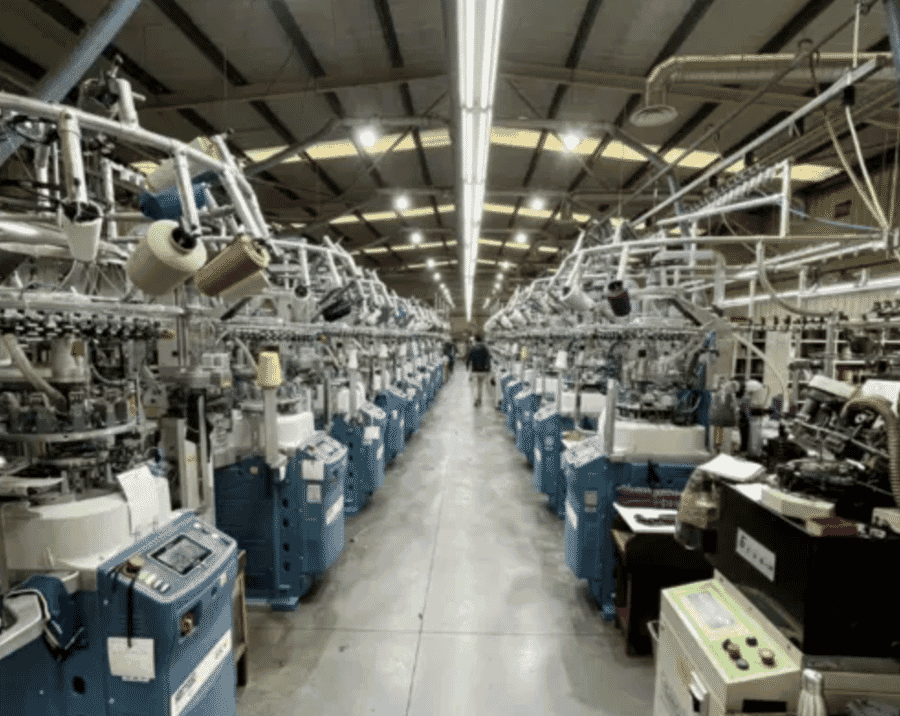
These certify the production site, not your product. They matter most in wet processing: dyeing, printing, washing and finishing.

Certifies the production site across six areas: chemical management, environmental performance, environmental management, occupational health and safety, social responsibility and quality management.
Watch out: A site certificate: it doesn’t test your finished garment.
Check it: OEKO-TEX Label Check
Controls chemicals and resource use at the input stage of wet processing: dyeing, printing, finishing. Most relevant for synthetic and performance fabrics.
Watch out: Mostly held by mills and chemical suppliers, less often by sewing factories.
Check it: bluesign finder
How the factory manages waste, water, energy and emissions, with targets and yearly audits. Increasingly asked for by large retail buyers.
Watch out: About how the site runs, not about your product.
Check it: IAF CertSearch
The factory environmental assessment from Cascale (formerly the Sustainable Apparel Coalition): energy, water, waste and emissions, often verified by a third party. Larger brands use it to score suppliers.
Watch out: An assessment score, not a certificate or a consumer label.
Check it: Ask the factory for its verified FEM score
Standards that show a factory runs consistent processes, and rules your product must meet for the markets you sell into.

Documented processes for consistent output, error tracking and corrective action. One of the most useful things to ask a new supplier for.
Watch out: Proves the system exists, not that every garment is perfect: you still need a QC plan.
Check it: IAF CertSearch
Restricts substances of very high concern and specific chemicals, such as certain azo dyes and nickel in metal trims, in products placed on the EU market.
Watch out: Not a certificate: a legal duty. Ask for test reports on dyed and treated fabrics and on trims.
Check it: ECHA restriction list
Required for textiles classed as personal protective equipment (PPE Regulation) or medical devices, such as high-visibility workwear or protective gloves.
Watch out: Regular fashion never carries CE marking: using it without a reason is itself a breach.
Check it: EU NANDO database of notified bodies
Tests sun protection under real-use conditions: stretched, wet and worn. The basis for UPF or sun-protection claims on swimwear and sportswear.
Watch out: Only needed if you make a UV claim.
Check it: UV Standard 801
How the people who make your clothes are treated: wages, working hours, safety and the right to organise.
.jpeg?w=900&format=optimal)
One of the strictest social standards: child and forced labour, health and safety, freedom of association, discrimination, working hours and pay. Audited by accredited bodies.
Watch out: Certifies the site; subcontracted steps need their own checks.
Check it: SAAS certified facilities
A membership programme for brands, not a factory certificate. Members commit to improving conditions at their suppliers and are assessed every year. Strong reputation in European fashion.
Watch out: The brand is the member: a factory can’t be “Fair Wear certified”.
Check it: Fair Wear member list
Fair wages, safe conditions and the right to organise along the textile chain, with audits by FLOCERT. More common in cotton farming than in garment making.
Watch out: Fairtrade cotton is a different, farm-level label.
Check it: FLOCERT customer search
Portugal’s national standard for social responsibility management systems, published by IPQ. Not textile-specific, but a sign of structured social management at a Portuguese company.
Watch out: Little known outside Portugal: pair it with an international standard for export buyers.
Check it: Ask for the certificate from an IPAC-accredited body
Name it in your brief. We place it with a factory in our group whose certificate covers your product.
Free brief · Reply within 24h · No commissions
CertificationsThree certifications doing three different jobs, and which one your brand needs.
EU rulesWhich certifications you need, which fibres qualify, and what EU regulation requires.
SourcingWhere to search, what to verify, and the red flags to walk away from.
ProductionHow the two production models change your costs, control and certificate paperwork.
Straight answers on certifications and what they mean for your production.
Your question isn’t here?
Send your brief. Our team in Porto replies within 24 hours, no sales pipeline.
Directory: one-time payment, instant access.
Many do, especially knit, jersey and dyeing companies in the northern cluster around Porto, Braga and Guimarães, where demand from European brands for organic cotton is strong. Not all of them do, and a sewing factory is only part of the chain. Always check the certificate number in the GOTS public database before you commit.
No, and the difference matters. OEKO-TEX Standard 100 tests the finished article for harmful substances: it tells you the garment is safe to wear. GOTS covers the whole production chain, including organic fibre, chemical management and social criteria. OEKO-TEX is widely held; GOTS is more demanding and is what you need for an organic claim. Our OEKO-TEX vs GOTS vs bluesign guide compares them.
No. GOTS is a full supply chain standard: every step from fibre to finished product must be certified, and your order needs a transaction certificate. If the fabric comes from a non-GOTS source, the garment can’t carry the GOTS label, even if the sewing factory is certified. This is the most common mistake brands make when starting sustainable production.
No voluntary certification such as GOTS or OEKO-TEX is required by law. What is mandatory for clothing sold in the EU: correct fibre composition labelling, general product safety rules, REACH chemical limits, and CE marking only for protective or medical textiles.
Start with the legal basics: correct fibre labelling and REACH compliance, backed by test reports for dyed fabrics and trims. Then OEKO-TEX Standard 100, a strong consumer signal most serious Portuguese factories can offer, and ISO 9001 as a sign the factory runs consistent processes. GOTS, GRS and SA8000 matter once you make organic, recycled or social claims, or sell to large retailers.
Go straight to the issuing body’s database: GOTS, OEKO-TEX Label Check, Textile Exchange for GRS, RCS, OCS and RWS, and IAF CertSearch for ISO. Search the company name or certificate number and check the valid-until date and scope. If a factory can’t give you a number, treat it as a red flag.
Yes. Many excellent Portuguese factories, especially smaller family-run workshops, hold no GOTS or even ISO 9001. A certificate is one signal, not the only one: we assess the factories in our group on the quality they ship, how they communicate and their track record. If you make a specific sustainability claim, though, you need the certificate behind it.
Better Cotton (formerly BCI) is a farm improvement programme that mostly works on mass balance: the cotton in your garment is usually not physically traced back to a Better Cotton farm. Organic cotton certified to GOTS or OCS is traced through every step. They are not interchangeable for claims on your label.
Pick what you make and your quantity. Name the certificate you need on the next step, and we reply within 24 hours.