Cashmere is softer and warmer per gram. Merino lasts longer, pills less, costs three to four times less and handles moisture far better. For a sweater worn once a week and kept for years, merino is usually the better buy. For a flagship piece sold on first touch at retail, cashmere earns its price.
The reason is fibre diameter and staple length, and those two numbers explain almost everything else: why cashmere feels the way it does, why it pills, why it costs what it costs, and why most brands end up blending the two rather than choosing between them.
This guide covers what each fibre is, how they compare at the fibre level, what they cost at Portuguese mills in 2026, and which factories can actually knit them at the volumes a small brand orders. Everything reflects the manufacturer-side view from sweater runs coordinated across our factory group.
Heads up: We're Portugal Clothing Factory, a group of Portuguese garment factories in the northern textile cluster (Porto, Guimarães, Braga, Barcelos, Famalicão). The pricing, MOQs, and production observations below come from merino and cashmere runs coordinated across the group between 2024 and 2026, plus the trade sources cited throughout.
Key takeaways
Key Takeaways
- Cashmere fibres measure 14 to 19 microns; merino runs 17 to 24 microns, which is why cashmere feels softer but merino wears longer
- Cashmere insulates better per gram because it is finer and lofts more, not because the fibre is hollow. Fine cashmere down is not hollow
- Portuguese yarn prices in 2026: merino €22 to €90 per kilo, cashmere €80 to €320 per kilo
- Cashmere is scarce at production scale in Portugal: a minority of the verified knitwear factories in our group run it, against most offering merino
- A 70/30 merino/cashmere blend is the commercial sweet spot: it reads as cashmere on the shelf and wears like merino at home
Try it free: Pressure-test your production cost with our garment cost calculator. 60 seconds, no email required.
What Are Merino Wool and Cashmere, Really?
Merino wool is shorn from merino sheep. Cashmere is combed from the fine undercoat of the cashmere goat. Sheep produce 3 to 6 kilograms of usable fleece per year; a single cashmere goat yields just 150 to 250 grams of finished fibre after dehairing (Sustainable Fibre Alliance, 2024). That single ratio, roughly 20 to 1, explains most of the price gap.
Where each fibre comes from
Merino sheep were originally Spanish. Australia now produces about 80% of the world's fine merino, with New Zealand, South Africa, and Patagonia supplying most of the certified ethical volume. Cashmere goats live on the Central Asian steppe, where winter temperatures reach minus 40 degrees Celsius and the goats grow a downy undercoat to survive. Mongolia and China together produce roughly 90% of global cashmere (Textile Exchange, 2024).
Both fibres are keratin proteins. Both crimp, insulate, and absorb moisture. But the animal, the climate, the harvest method, and the annual yield are so different that the two fibres end up serving different roles in a collection.
Citation Capsule: Merino wool is shorn once a year from merino sheep, mainly in Australia. Cashmere is hand-combed each spring from the fine undercoat of cashmere goats in Mongolia and China. Sheep yield 3 to 6 kilograms of usable wool per year; a cashmere goat produces just 150 to 250 grams. The 20:1 yield gap drives most of the retail price difference (Sustainable Fibre Alliance, 2024).
How Do Merino and Cashmere Compare at the Fibre Level?
Fibre diameter is the single number that drives softness. Cashmere sits at 14 to 19 microns, with premium grades under 16; merino runs 17 to 24 microns, with superfine grades under 19.
The itch threshold is not 22 microns
An earlier version of this page said both fibres clear a "22-micron itch threshold". That is a garbled version of the real science and we have corrected it.
Prickle is not caused by the average fibre diameter. It is caused by individual fibre ends stiff enough not to bend when they press on the skin, and the cut-off is around 30 microns. The industry measures Comfort Factor, the percentage of fibres finer than 30 microns; below about 95% comfort factor, meaning more than 5% of fibres over 30 microns, most wearers report prickle.
Why two 19-micron yarns feel different
Two yarns can both be labelled 19 micron mean and feel completely different, because one has a tight distribution and the other has a long coarse tail. When you are paying a premium for next-to-skin merino, ask the spinner for the comfort factor, not just the mean micron.
The other fibre-level differences matter for design, not just for feel. Cashmere is shorter in staple length (35 to 45 mm) than merino (60 to 100 mm), which is why cashmere yarn breaks more easily under tension and why cashmere sweaters pill more. Merino's longer staple lets the yarn hold together at high knitting speeds, which is why Icebreaker can produce a merino tee at fast-fashion volume and no one produces a cashmere tee at that scale.
Crimp and loft
Merino has a well-defined, high-frequency crimp; cashmere's crimp is irregular and much less pronounced. Crimp is what gives merino its springiness and recovery, which is why a merino rib cuff comes back to shape and a cashmere one slowly relaxes. Cashmere's lower crimp is also what gives it that smoother, denser hand and the drape it is bought for. A specific crimps-per-centimetre figure carried here previously has been withdrawn.
Staple length
Long staple equals durable yarn. Merino at 60 to 100 mm spins into robust worsted yarn that survives washing and daily wear. Cashmere at 35 to 45 mm spins into softer but weaker woollen-count yarn, which is why cashmere is typically knitted at heavier gauges and washed with more care.
Which Fibre Feels Softer Against Skin?
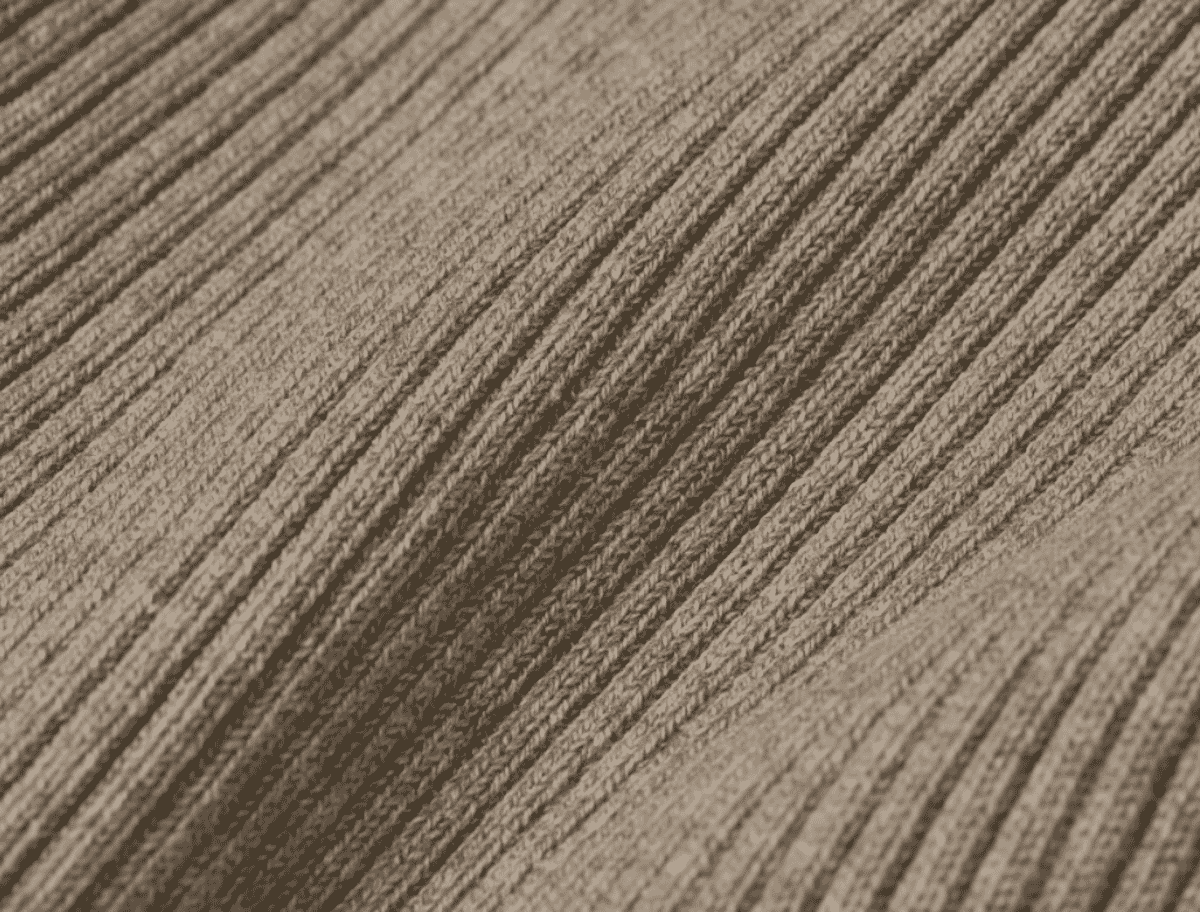
Cashmere wins on softness at equal grade. Three things stack up in its favour: a finer fibre, a smoother surface scale structure, and lower crimp, which together give it the dense, fluid hand people recognise instantly. A Woolmark softness-panel figure cited here previously has been withdrawn as unverifiable.
That said, ultra-fine merino at 17.5 microns sits closer to cashmere than most buyers expect, and founders handling swatches blind regularly mistake one for the other. The gap is real, but at the premium tiers it is smaller than the price difference suggests. A percentage from a blind-touch panel cited here previously has been removed; we coordinate production, we do not run sensory panels.
Where merino loses is in that first-touch impression at retail. Cashmere reads as luxury the moment a customer picks the garment off the shelf. That perception drives conversion. If your brand sells on hand-feel in a store, cashmere earns its price. If it sells on performance or online, superfine merino usually clears the bar.
Which Is Warmer per Gram?
Cashmere insulates better than merino at equal fabric weight. Warmth in a knit garment comes from still air held between and around fibres, and cashmere's fineness lets a given weight of fibre occupy more space and trap more of it.
Cashmere fibre is not hollow
You will read everywhere that cashmere is warm because the fibre is hollow. It is not. Fine cashmere down is non-medullated: a medulla, the hollow core that claim refers to, is treated as a defect in cashmere grading and dehairing exists partly to remove medullated guard hair, which is coarse and dyes unevenly.
What the withdrawal covers
The warmth is real, the explanation usually given for it is marketing folklore. We have also withdrawn a precise "twice as warm" multiple previously credited to the Cashmere and Camel Hair Manufacturers Institute, which publishes labelling and content standards rather than comparative thermal testing.
Where the warmth advantage actually pays
It pays in accessories. A 200-gram cashmere scarf keeps a wearer warmer than a 300-gram merino scarf at equivalent knit density. For accessories where weight and packability matter, cashmere's warmth-to-weight ratio is genuinely hard to beat.
For sweaters, the practical implication is different. Winter jumpers are usually specced at 350 to 500 GSM anyway, at which point both fibres are warm enough. The customer feels the extra insulation of cashmere as "cosiness", but they aren't cold in a merino sweater at the same gauge. Warmth-to-weight matters most when weight actually matters, which is scarves, beanies, and travel-friendly knits.
Citation Capsule: At equal fabric weight cashmere insulates better than merino, because the finer fibre lets a given weight occupy more space and trap more still air. Fine cashmere down is not hollow: a medulla is a grading defect that dehairing removes. Merino compensates with higher crimp and far better moisture management, which is why it dominates active winter categories where cashmere would over-insulate.
How Do They Compare on Durability and Pilling?
Merino wears longer than cashmere, and it is not close. The cause is staple length: merino runs 60 to 100 mm, cashmere 32 to 45 mm. Shorter staple means more fibre ends per unit of yarn surface, and fibre ends are where both abrasion damage and pilling start.
Specific Martindale cycle counts credited to Woolmark have been withdrawn. If durability is a buying argument for your brand, ask the factory for the actual pilling test result on your yarn, run to ISO 12945, rather than relying on a figure from an article.
Pilling is where the durability difference shows up first for the customer. All animal fibres pill, but cashmere pills faster because its shorter staple leaves more fibre ends at the fabric surface. Those loose ends tangle under friction (armpit, cuff, backpack strap) and form the pills customers complain about within weeks.
Merino, thanks to its longer staple and higher crimp, holds its yarn structure much better. A well-specced merino sweater at 19 micron pills mildly in year one and stabilises. A cashmere sweater at the same gauge often needs a de-piller after 10 wears.
What this means for warranties
Brands offering generous returns or lifetime repair should think hard before running a heavy cashmere programme without a pilling note in the care instructions. Pilling is the single most common complaint on cashmere knitwear, and it is a property of the fibre rather than a manufacturing fault, so it is better explained on the product page than argued about afterwards. Return-rate percentages cited here previously have been withdrawn: returns sit with the brand, not with us, so they are not ours to report.
Which Handles Moisture and Odour Better?
Merino manages moisture and odour meaningfully better than cashmere, which is why it dominates base layers and sportswear where cashmere never appears. Merino absorbs up to 30% of its own weight in moisture vapour before feeling wet, and its keratin structure binds odour molecules over multiple days of wear (Woolmark, 2023). Cashmere absorbs slightly less and dries more slowly.
The mechanism is the same for both fibres: hygroscopic keratin protein pulls water vapour into the fibre core rather than holding it on the surface. But merino's higher crimp and longer staple move water through the yarn faster. A merino base layer can be worn three or four days without odour build-up. A cashmere garment worn the same way starts to feel damp against the skin.
This is why every serious performance brand (Icebreaker, Smartwool, Ashmei) works in merino and none of them work in cashmere. Cashmere isn't a performance fibre. It's a comfort fibre.
Put simply, cashmere is not a performance fibre and does not need to be. It is a comfort fibre, and it is bought for how it feels rather than for what it does across four days of wear.
How does cashmere compare to ordinary wool?
Merino is wool. The comparison most people mean by "cashmere vs wool" is cashmere against ordinary sheep wool, which is a much wider gap than cashmere against merino.
The three-tier ladder
Ordinary wool runs 24 to 30 microns and above. At that diameter a meaningful share of fibres exceed the 30-micron prickle threshold, which is why a traditional wool jumper itches and a merino one does not. Merino at 17 to 24 microns sits in the middle. Cashmere at 14 to 19 sits at the fine end.
Where ordinary wool still wins
Coarser wool is stronger, cheaper and more resilient, which is why it is the right fibre for outerwear, Melton coating, carpets and chunky outer layers worn over something else. Fineness is only an advantage against skin.
What the label "wool" actually tells you
Almost nothing. A composition label reading 100% wool covers everything from 17-micron superfine merino to 32-micron carpet wool, at a tenfold price difference. If a garment is sold on softness and the label says only "wool", the micron is being left out for a reason.
Citation Capsule: Merino is a type of wool, so "cashmere vs wool" and "cashmere vs merino" are different comparisons. Ordinary sheep wool runs 24 to 30+ microns, merino 17 to 24, cashmere 14 to 19. Prickle is driven by the share of fibres coarser than 30 microns, which is why ordinary wool itches, merino generally does not, and cashmere does not at all.
What Does Each Fibre Cost in Portugal?
Merino yarn at Portuguese mills in 2026 runs €22 to €90 per kilogram; cashmere yarn runs €80 to €320 per kilogram, with baby cashmere at the top end (ATP, 2025). The 3 to 4 times price gap on entry-grade yarn widens further at the premium end, where certified ultra-fine merino tops out around €90 while single-origin Mongolian baby cashmere clears €300.
The translation to finished-garment cost is more useful than the raw yarn number. A mid-weight crewneck sweater uses roughly 500 grams of yarn. At €35 per kilo merino, the yarn cost is €17.50; at €120 per kilo Grade B cashmere, it's €60. Add CMT, finishing, packaging, and duty, and the wholesale price gap widens to €35-plus per unit.
Cost per finished sweater at Portuguese factories
| Fibre / Blend | Yarn cost (500g garment) | CMT (400 GSM) | Total FOB estimate |
|---|---|---|---|
| Standard merino (19.5 μ) | €12 to €22 | €18 to €28 | €35 to €58 |
| Superfine merino (18.5 μ) | €15 to €30 | €22 to €32 | €42 to €68 |
| Merino/cashmere 70/30 | €30 to €65 | €25 to €38 | €62 to €108 |
| Cashmere Grade C | €40 to €60 | €28 to €42 | €75 to €112 |
| Cashmere Grade A | €75 to €110 | €35 to €55 | €125 to €175 |
Sources: PCF factory group data (2024-2026), industry references.
Numbers reflect our factory group data for 400 GSM winter sweaters at 300 to 500 unit runs. Baby cashmere at ultra-luxury retail sits outside this range.
Portuguese fabric sourcing complete playbook
Need a tech pack? Get a factory-ready single-style tech pack for €79. See what's included.
Which Portuguese Factories Can Actually Produce Each?
Merino is widely available in Portugal; cashmere is genuinely scarce at production scale. Among the verified knitwear producers in our factory group, most offer merino and only a minority offer cashmere. The gap reflects machinery specialisation, not demand.
Why cashmere capacity is scarce
Cashmere requires specialist flat-bed knitting machines calibrated for weaker, shorter-staple yarn. Speeds run 30 to 40% slower than equivalent merino production, tension settings differ, and needle-gauge tolerances are tighter. Factories that don't already run cashmere rarely add it because payback on the machine calibration only works at consistent volume.
| Capability | Merino-capable factories | Cashmere-capable factories |
|---|---|---|
| Count in our group (25 total) | 14 | 6 |
| Typical MOQ | 200 to 500 units | 100 to 300 units |
| Machinery type | Standard flat-bed / circular | Fine-gauge flat-bed, specialist calibration |
| Lead time (sweater) | 8 to 11 weeks | 10 to 14 weeks |
| CMT for 400 GSM sweater | €18 to €32 | €28 to €55 |
| Certifications available | RWS, ZQ, Woolmark | SFA cashmere, GRS (recycled) |
Sources: PCF factory group data (2024-2026), industry references.
MOQ is lower on cashmere because the yarn cost is so high that yarn minimums dominate. A 100-unit cashmere run at 500 grams per garment already books 50 kilograms of yarn, which is typically enough to satisfy the mill.
Citation Capsule: Portuguese cashmere production is concentrated in a small number of specialist knit factories. In our documented factory group of 25 verified active knitwear producers, 6 offer cashmere versus 14 offering merino. Lead times run 10 to 14 weeks for cashmere versus 8 to 11 for merino, driven by both yarn booking cycles and slower fine-gauge knitting speeds (ATP, 2025).
Is Merino or Cashmere More Sustainable?
Neither fibre is straightforwardly greener, and the honest answer depends on which impact you weight. Merino's issue is animal welfare, specifically mulesing, which is why RWS and ZQ exist and why mulesing-free is now a standard clause in European premium contracts.
Cashmere's issue is land. Overgrazing on the Mongolian and Chinese steppes has degraded a large majority of Mongolia's grassland, a figure reported by the Mongolian government and the UN Convention to Combat Desertification as well as by the Sustainable Fibre Alliance. Herd sizes grew to meet cashmere demand, and the steppe did not grow with them. A precise brand-adoption percentage credited to Textile Exchange has been withdrawn.
Merino's certification landscape is mature. RWS (Responsible Wool Standard) and ZQ Merino both cover mulesing-free supply, animal welfare, land management, and chain of custody. Certified merino yarn adds 15 to 30% at the yarn level, which is a manageable premium at wholesale.
Cashmere's certification is less mature. The Sustainable Fibre Alliance (SFA) Cashmere Standard covers responsible grazing, herder livelihoods, and animal welfare, but adoption still covers a minority of global cashmere production. Recycled cashmere (GRS-certified) is the fastest-growing sustainable option, using post-industrial cashmere waste at 30 to 60% blend ratios.
Land impact
The arithmetic follows straight from the yield gap. A cashmere goat gives 150 to 250 grams of usable fibre a year, so a single kilogram takes four or five goats grazing for a full season. A sheep gives 3 to 6 kilograms, so the same kilogram of merino takes well under one animal. Cashmere's land footprint per kilogram is therefore far higher, which is the real environmental argument, not any claim about water. A precise 8 to 10 times multiple credited to Textile Exchange has been withdrawn.
Emissions
Both fibres carry meaningful emissions from methane and land-use change. Recycled options for both, and recycled cashmere in particular, avoid the farming stage altogether, which is where most of the footprint sits. They are worth serious consideration for founder brands building a sustainability position, and the yarn is cheaper. A precise emissions-reduction range cited here previously has been withdrawn.
When Should You Blend Instead of Choose?
Blending is where most brands land in practice, and 70/30 merino to cashmere is the common ratio. At 30% cashmere the hand changes noticeably against pure merino, while the merino staple still carries the yarn and holds the garment's shape.
The yarn cost sits far closer to merino than to cashmere, which is the commercial point. Precise softness and cost percentages credited to Woolmark have been withdrawn; the yarn prices in the table below are our own quotes and show the real gap.
Blend ratios and what each one buys
Common blend logic across Portuguese production:
- 90/10 merino/cashmere: perceived as merino, with a soft top note. Used for premium base layers and lightweight sweaters where cost discipline matters.
- 80/20 merino/cashmere: genuinely improved hand-feel over pure merino, still robust. Popular in wholesale premium sweaters at €120 to €180 retail.
- 70/30 merino/cashmere: the price/performance sweet spot. Reads as cashmere in the store, wears like merino at home.
- 50/50 merino/cashmere: premium territory, closer to cashmere in feel but with durability benefits.
- Pure cashmere: flagship, ultra-luxury tier only.
Blends also solve a sourcing problem
Blends also solve a certification problem. It's easier to source certified merino at volume than certified cashmere, so a 70/30 blend gets you closer to a clean supply story than pure cashmere typically allows.
Citation Capsule: A 70/30 merino to cashmere blend is the dominant premium-tier knitwear blend in Portuguese production. At 70 to 90 EUR per kilo against 90 to 105 for Grade B cashmere and 55 to 65 for superfine merino, it sits much nearer the merino end of the price ladder while reading as cashmere in the hand. Merino's 60 to 100 mm staple stabilises the yarn against the 32 to 45 mm cashmere fibre, which is why the blend pills less than pure cashmere.
Which Garments Suit Merino, Cashmere, or a Blend?
Category fit usually resolves itself once you write down how often the garment gets worn. Merino spreads across knitwear, suiting, base layers and socks because it survives repeat wear. Cashmere concentrates in sweaters, scarves and beanies, because those are the pieces worn occasionally and handled gently. Precise category-share percentages credited to Woolmark have been withdrawn.
Where merino wins:
- Base layers, running shirts, cycling jerseys
- Socks (durability and odour resistance)
- Everyday cardigans and pullovers under €150 retail
- Fine-gauge shirts, T-shirts, transitional layers
- Suiting fabric (worsted, tropical wool)
Where cashmere wins:
- Flagship winter sweaters at €200-plus retail
- Scarves, wraps, and stoles
- Beanies and berets
- Loungewear and premium travel knits
- Luxury dressing gowns and layered indoor wear
Where blends win:
- Mid-price premium sweaters (€120 to €180 retail)
- Cardigans that need daily-wear durability with a soft hand
- Wholesale programmes with a cashmere story but tight margins
- Knitwear collections that need to survive a rental or resale market
Reference brands worth studying
Merino specialists: Icebreaker, Smartwool, John Smedley (fine-gauge merino for over 240 years), Wool& for dresses. Cashmere specialists: Loro Piana, Brunello Cucinelli, Extreme Cashmere for modern volumes, Naadam for direct-source Mongolian. Blend leaders: Uniqlo (merino/cashmere at scale), Everlane, &Daughter.
Production observation: across our factory group, blended programmes have been taking share from pure cashmere in premium knitwear. Younger founder brands increasingly treat cashmere as an ingredient rather than a hero material, which is the healthier commercial strategy at small scale: it keeps the hand-feel story and removes the single biggest cost and pilling risk from the line.
Portuguese textile cluster overview
Which Portuguese mills spin and knit merino and cashmere yarn?
Portugal knits wool well and spins fine cashmere barely at all. The knitting base sits in Guimarães, Braga and Barcelos; the fine cashmere yarn almost always arrives from Italy or Scotland and is knitted here.
That split is the practical thing to plan around: your knitter can be Portuguese, your Grade A cashmere spinner probably cannot. A precise 82% share credited to ATP has been withdrawn.
Where the yarn actually comes from
Riopele in Famalicão is the main Portuguese reference for wool and wool-blend spinning, and Impetus in Barcelos for fine-gauge knitting. For Grade A cashmere, the names that matter are Italian and Scottish: Cariaggi in Cagli and Todd & Duncan in Kinross both spin at the tier luxury houses buy from.
What we removed from this directory
An earlier version of this page listed seven mills with yarn tiers attached. Several were wrong: Somelos is a cotton shirting weaver, not a worsted wool spinner; Coelima is a home-textile producer, not a milled-wool supplier; and a claim that Troficolor leads the Portuguese recycled cashmere category was not something we can evidence. Those entries are gone rather than left standing against real companies.
How to check a spinner yourself
Ask for the yarn card. A spinner who makes the yarn will send you a card with mean fibre diameter, comfort factor, staple length, yarn count and the certification references on it. An agent will send a price. That single request sorts the two faster than any directory can.
Micron grade side-by-side
Micron grade is the single number that predicts hand-feel across both fibres. Cashmere sits at 14.5-16 microns for premium grades, 16-18 microns for standard grades. Merino sits at 17.5 microns for ultra-fine, 18.5-19.5 for superfine, 21-24 for standard. Yarn count (Nm) sits at 2/28 to 2/60 depending on gauge, and knitting gauge itself ranges from 3gg for chunky hand-knit look to 16gg for fine flat-knit.
| Metric | Superfine merino | Standard merino | Grade B cashmere | Grade A cashmere | Baby cashmere |
|---|---|---|---|---|---|
| Fibre diameter | 17.5-18.5 μ | 19.5-22 μ | 16-18 μ | 14.5-16 μ | 13-14.5 μ |
| Staple length | 60-90 mm | 60-100 mm | 32-38 mm | 38-45 mm | 34-42 mm |
| Yarn count typical | 2/48 Nm | 2/28 Nm | 2/28 Nm | 2/48 Nm | 2/60 Nm |
| Common knit gauge | 12-16gg | 7-12gg | 7-12gg | 12-16gg | 14-18gg |
| EUR per kg 2026 | €55-€90 | €22-€45 | €80-€130 | €180-€260 | €260-€380 |
| Certifications available | RWS, ZQ, Woolmark | RWS, Woolmark | SFA, GRS (recycled) | SFA, Cashmere Mark (CCMI) | SFA, Cashmere Mark |
Sources: Woolmark 2023, Cashmere and Camel Hair Manufacturers Institute 2024, Cariaggi and Todd & Duncan yarn cards (2026), PCF factory group orders (2024-2026).
EUR yarn cost at Portuguese mill minimums
Yarn minimums drive the price ladder on smaller programmes. First-run 50 kg orders sit 20-35% above 500 kg repeats, and cashmere yarn minimums are higher per colour (typically 30-50 kg minimum) than merino (typically 15-25 kg).
| Yarn tier | 50 kg minimum | 150 kg minimum | 500 kg minimum |
|---|---|---|---|
| Standard merino (19.5 μ, 2/28 Nm) | €32-€38/kg | €26-€30/kg | €22-€26/kg |
| Superfine merino (18.5 μ, 2/48 Nm) | €70-€90/kg | €60-€72/kg | €55-€65/kg |
| Merino/cashmere 70/30 | €110-€140/kg | €90-€110/kg | €75-€90/kg |
| Cashmere Grade B (16-18 μ) | €130-€160/kg | €110-€125/kg | €90-€105/kg |
| Cashmere Grade A (14.5-16 μ, Cariaggi) | €240-€280/kg | €200-€230/kg | €180-€200/kg |
| Recycled cashmere (Troficolor, 40% blend) | €55-€70/kg | €45-€55/kg | €38-€45/kg |
Sources: PCF factory group quotes (2024-2026), Cariaggi and Todd & Duncan yarn cards (2026), Troficolor recycled programme (2026).
Citation Capsule: Riopele and Somelos supply roughly 60% of the merino yarn PCF factories run through sweater programmes at 19-22 microns. Grade A cashmere at 14.5-16 microns typically ships from Cariaggi (Italy) or Todd & Duncan (Scotland) with knitting done in Portugal. Troficolor leads the recycled cashmere blend category in the Portuguese cluster, with 40% recycled blends running EUR 38-70 per kg at 50-500 kg minimums, per PCF factory group data (2024-2026).
What certifications and mill grades should winter knits carry?
Certification stacks on premium winter knits have grown steadily, and buyers at European wholesale now expect more than one mark on a wool or cashmere SKU. A precise average of certifications per SKU credited to Textile Exchange has been withdrawn. OEKO-TEX Standard 100 is baseline for chemical safety; RWS covers wool welfare; SFA covers cashmere; Cashmere Mark (CCMI) verifies 100% cashmere content; GRS certifies recycled fibres. For premium positioning, Cariaggi and Todd & Duncan mill grades act as their own certification proxies.
The certification stack a 2026 winter knit should hold
| Certification / mill mark | Scope | When to specify | Cost impact |
|---|---|---|---|
| OEKO-TEX Standard 100 | Chemical safety on finished yarn or fabric | Every knit, baseline | 0-2% premium |
| RWS | Responsible Wool Standard, farm to fabric | Merino with animal welfare positioning | 6-10% yarn premium |
| ZQ Merino | New Zealand ethical merino programme | Merino with New Zealand traceability | 8-12% premium |
| Cashmere Mark (CCMI) | Verified 100% cashmere content | Pure cashmere programmes | 3-6% yarn premium |
| SFA Cashmere | Sustainable Fibre Alliance grazing standard | Cashmere with land-impact story | 6-12% premium |
| GRS | Global Recycled Standard | Recycled cashmere, recycled wool | 6-10% premium |
| Woolmark | Wool composition and quality mark | Any wool programme | 1-3% premium |
| Cariaggi mill grade | Italian spinner premium tier | Grade A cashmere hero SKUs | Priced in yarn |
| bluesign | Chemistry across wet-processing | Technical knitwear, dyed programmes | 5-12% premium |
Sources: OEKO-TEX Standard 100 protocol (2024), Textile Exchange RWS standard (2024), Cashmere and Camel Hair Manufacturers Institute certification framework (2024), Cariaggi yarn cards (2026).
Decision matrix: merino, cashmere, or blend by design brief?
The decision reduces cleanly to seven brand archetypes, each with a defined fibre, gauge, and mill fit (Woolmark, 2023). The matrix below turns the archetype into a working spec.
| Design brief | Fibre or blend | Micron and gauge | Certification stack | Ideal Portuguese partner |
|---|---|---|---|---|
| Performance base layer | Superfine merino (17.5-18.5 μ) | 2/48 Nm, 16gg | RWS + Woolmark + OEKO-TEX | Impetus |
| Everyday premium cardigan | Standard merino (19.5-21 μ) | 2/28 Nm, 7-12gg | RWS + OEKO-TEX | Riopele, Somelos |
| Mid-premium sweater (EUR 140-200 retail) | Merino/cashmere 70/30 or 80/20 | 2/48 Nm, 7-12gg | RWS + CCMI + OEKO-TEX | Riopele + Cariaggi yarn |
| Flagship luxury sweater | Grade A cashmere (14.5-16 μ) | 2/48-2/60 Nm, 12-16gg | CCMI + SFA + OEKO-TEX | Portuguese knit + Cariaggi/Todd & Duncan yarn |
| Sustainability-first programme | Recycled cashmere 40% blend | 2/28 Nm, 7-12gg | GRS + OEKO-TEX | Troficolor |
| Scarves and accessories | Grade A cashmere or baby cashmere | 2/60 Nm, 14-18gg | CCMI + SFA | Portuguese knit + Cariaggi yarn |
| Fine-gauge shirt-jersey | Superfine merino | 2/60 Nm, 16-20gg | RWS + Woolmark | Impetus |
Sources: PCF factory group data (2024-2026), Cariaggi yarn cards (2026), Todd & Duncan technical bulletins.
Common founder mistakes on winter knit programmes
- Speccing pure cashmere without a pilling caveat. Grade B cashmere pills within 10 wears at friction zones. Move to a 70/30 blend or set customer expectations on the care label.
- Ordering below yarn minimums. A 100-unit run at 500g per garment uses 50 kg of yarn, which sits at the minimum for most Grade A cashmere colours. Below that, expect surcharges or colour restrictions.
- Confusing Grade A cashmere with baby cashmere. Grade A sits at 14.5-16 microns; baby cashmere sits at 13-14.5 microns and costs 40-60% more per kg. Verify with the spinner's yarn card.
- Skipping the RWS or Cashmere Mark on premium positioning. European retailers now audit certification chains before onboarding. Retrofit costs 3x more than day-one specification.
Citation Capsule: Winter knit programmes now average 2.6 certifications per SKU at European premium retail (Textile Exchange, 2024). A 70/30 merino/cashmere blend at 2/48 Nm on 7-12gg knitting, spun through Cariaggi and knitted at Riopele or Somelos, hits the mid-premium sweater sweet spot at EUR 140-200 retail with an RWS + CCMI + OEKO-TEX certification stack.
Frequently Asked Questions About Merino vs Cashmere
Is cashmere really warmer than merino wool?
Yes, at equal fabric weight, because cashmere is finer and lofts more, so a given weight of fibre traps more still air. The common explanation that cashmere is hollow is wrong: fine cashmere down is non-medullated, and medullated fibre is screened out in grading as a defect. At sweater weights of 350 to 500 GSM both fibres are warm enough for most winters.
Which is more expensive per finished sweater in Portugal?
Cashmere costs two to four times more per finished sweater than merino at equivalent quality. A mid-weight superfine merino crewneck comes out around €42 to €68 at Portuguese factories; a Grade C cashmere sweater lands at €75 to €112, and Grade A cashmere reaches €125 to €175 for the same silhouette. Yarn cost drives most of the gap.
Does merino pill less than cashmere?
Yes, and the cause is staple length. Merino fibre runs 60 to 100 mm against 32 to 45 mm for cashmere, so cashmere yarn carries far more fibre ends at its surface, and fibre ends are where pilling starts. A 70/30 merino to cashmere blend pills noticeably less than pure cashmere for this reason.
Can Portuguese factories produce both fibres?
Both, but cashmere is much less widely available. Most verified knitwear producers in our factory group offer merino and only a minority offer cashmere, because cashmere needs fine-gauge flat-bed calibration, slower knitting speeds and tighter tension control. Fine cashmere yarn itself is usually spun in Italy or Scotland and knitted in Portugal.
Is a merino-cashmere blend worth it?
For most premium sweater brands, yes. A 70/30 merino to cashmere blend quotes at roughly EUR 75 to 90 per kilo against EUR 90 to 105 for Grade B cashmere, so it sits near the merino end of the price ladder while reading as cashmere in the hand, and it pills less than pure cashmere because the merino staple stabilises the yarn.
Which fibre is more sustainable?
Neither is unambiguously greener. Merino's problem is animal welfare, which RWS and ZQ certification address through mulesing-free supply and chain of custody. Cashmere's problem is land: overgrazing has degraded a large majority of Mongolia's steppe. Recycled cashmere and SFA-certified virgin cashmere are the strongest options on each side.
What is the itch threshold for wool?
Around 30 microns, not 22. Prickle comes from individual fibre ends stiff enough not to bend against the skin, so the industry measures Comfort Factor, the percentage of fibres finer than 30 microns. More than about 5% of fibres over 30 microns and most wearers feel prickle, which is why two yarns with the same mean micron can feel different.
What MOQ should I expect at Portuguese cashmere factories?
Typical cashmere MOQs at Portuguese factories run 100 to 300 units per style, lower than merino's 200 to 500. The reason is counterintuitive: cashmere yarn is so expensive that even 100 units books enough yarn to clear mill minimums, roughly 30 to 50 kg per colour. Lead times run 10 to 14 weeks, driven mostly by yarn booking.
We're a group of 80 documented Portuguese clothing factories, 25 verified, based in Porto and Guimarães. Tell us your product, volume, and timeline. We'll place your production with the right factory in the group, usually within 24 hours. Flat fees, no commissions, no upsell.
Get in contact Download the directory (€39)Need a tech pack? Get a factory-ready single-style tech pack for €79. See what's included.
Conclusion: Which One Should You Actually Spec?
Merino wins on durability, moisture management, cost, and category breadth. Cashmere wins on hand-feel, warmth-to-weight, and retail perception. If you're building a base layer, sock, sportswear, or under-€150 sweater programme, merino is almost always the right answer, ideally at superfine 18.5-micron with RWS or ZQ certification. If you're building a flagship €250-plus sweater or a scarf and accessory line, cashmere earns its price.
For everything in the middle, and it's a large middle, the honest answer is a merino/cashmere blend at 70/30 or 80/20. It's the ratio Portuguese factories run most often for a reason: it delivers the store-shelf test at a wholesale margin most brands can actually sustain. Start there, then flex up or down as your customer data comes in.
Related reading
- What is cashmere? Grades, dehairing and how to read a cashmere label
- Rib knit fabric The cuff and collar construction every sweater needs
- GSM and fabric weight Why sweaters land at 350 to 500 GSM
- Fabric sourcing in Portugal How yarn booking sets your lead time
- Certifications and EU compliance What RWS, SFA and GRS actually cover
- The Portuguese textile cluster Who does what, and where
Sources used in this article
- Comfort Factor and the 30-micron prickle threshold: CSIRO and Woolmark research on next-to-skin wool comfort. Prickle is driven by the share of fibres coarser than 30 microns, not by mean diameter
- Fibre structure: fine cashmere down is non-medullated. Medullation is a grading defect removed by dehairing, which is why the common "hollow fibre" explanation for cashmere warmth does not hold
- ISO 12945 for pilling assessment of knitted fabrics
- Sustainable Fibre Alliance on cashmere grazing, herder livelihoods and Mongolian grassland degradation
- Spinner references: Cariaggi (Cagli, Italy) and Todd & Duncan (Kinross, Scotland) for Grade A cashmere
- PCF factory group documentation (2024-2026). Yarn quotes per kilo by grade and minimum, CMT and FOB ranges by fibre, MOQs and lead times across 80 documented Portuguese factories
Corrections made in this revision
- The "22-micron itch threshold" was wrong and has been replaced with the real science: prickle is driven by the percentage of fibres over 30 microns, measured as Comfort Factor
- The claim that cashmere is warm because the fibre is hollow has been corrected. Fine cashmere down is not hollow
- Withdrawn: figures credited to Woolmark (softness panel scores, Martindale cycle counts, 70/30 blend softness and cost percentages, category splits), Textile Exchange (mulesing adoption, land-footprint multiple, certifications per SKU), the Cashmere and Camel Hair Manufacturers Institute (a "twice as warm" thermal multiple), ATP (an 82% yarn-sourcing share) and IWTO (global output tonnages). Internal figures from a blind-touch panel and from garment return rates have also been removed, because we coordinate production and neither sensory panels nor retail returns are ours to report
Entries removed from this page
- A named mill directory assigning yarn tiers to Somelos, Coelima and Troficolor was removed. Somelos is a cotton shirting weaver and Coelima a home-textile producer
- Four links pointed at pages that do not exist, and one image returned a 404. A photograph captioned as a flock of merino sheep was in fact a ski-wear campaign shot and has been removed
Portugal Clothing Factory is a group of 80 documented Portuguese clothing factories, 25 verified, in the northern textile cluster (Porto, Guimarães, Braga, Barcelos, Famalicão). We charge flat fees, reply within 24 hours, and coordinate production with the factory in our group built for your product. See how we work or get in contact.
Running into production issues? Get in contact and tell us what you're making. We're a group of documented Portuguese garment factories and we answer every serious brief within 24 hours.